Steam Boiler Services
Care for steam systems, from vents and traps to water level controls and older pipework.

Steam and hot water boilers both heat with a boiler, but they move heat very differently. Learn how each works and which fits your home.
By Boiler Guard Delaware
Walk into an older Delaware home and you may find tall, ornate radiators fed by steam, while a newer home more often has panel radiators or baseboards fed by hot water. Both systems start at a boiler, but steam travels as vapor under its own pressure, and hot water travels as liquid pushed by a pump. That difference shapes comfort, noise, upkeep, and which homes each system suits. This guide compares them side by side so you can understand the system you already own, or judge a change with clear eyes.
If you are unsure which system your home has, a quick look at the radiators and the boiler room usually settles it. Tall, ornate radiators with air vents, and a boiler with a water level gauge, point to steam, while panel radiators or baseboards with a circulator pump point to hot water. Note what you find before you call, since that detail shapes every recommendation that follows. Both systems have served Delaware homes well for generations, and understanding yours is the first step to keeping it healthy.
A steam boiler heats water until it boils, and the steam rises through pipes to radiators, where it gives up heat and condenses back to water. That water then returns to the boiler to be heated again. The cycle needs no pump, since steam pressure does the moving.
Steam radiators run hotter than hot water radiators, and they heat quickly once steam arrives. They also cool in a distinct pattern, and they can hiss or knock as air leaves the system through vents. Those sounds are normal in moderation, but loud banging or constant hissing usually means a vent, trap, or water level needs attention.
Steam systems need their water level watched. If the level drops too low, the boiler can overheat, so steam boilers carry a low-water cutoff as a safety control. Keeping that control working, and keeping vents clear, is the core of steam upkeep, along with watching for leaks at valves and traps.
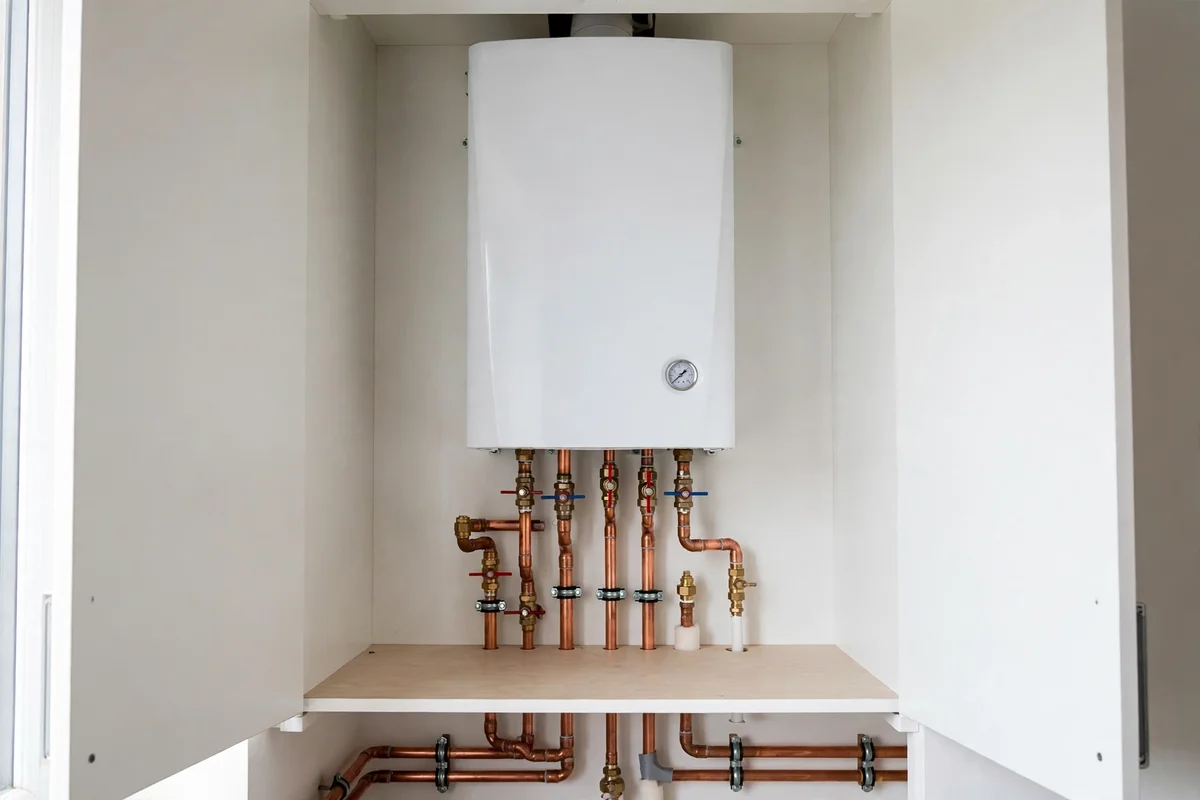
A hot water boiler heats water without boiling it, and a pump, called a circulator, pushes that water through pipes to radiators, baseboards, or underfloor loops. Because the water stays liquid, temperatures stay lower and steadier than steam, and rooms warm more evenly. Zone valves or separate pumps can divide the home into areas with their own thermostats.
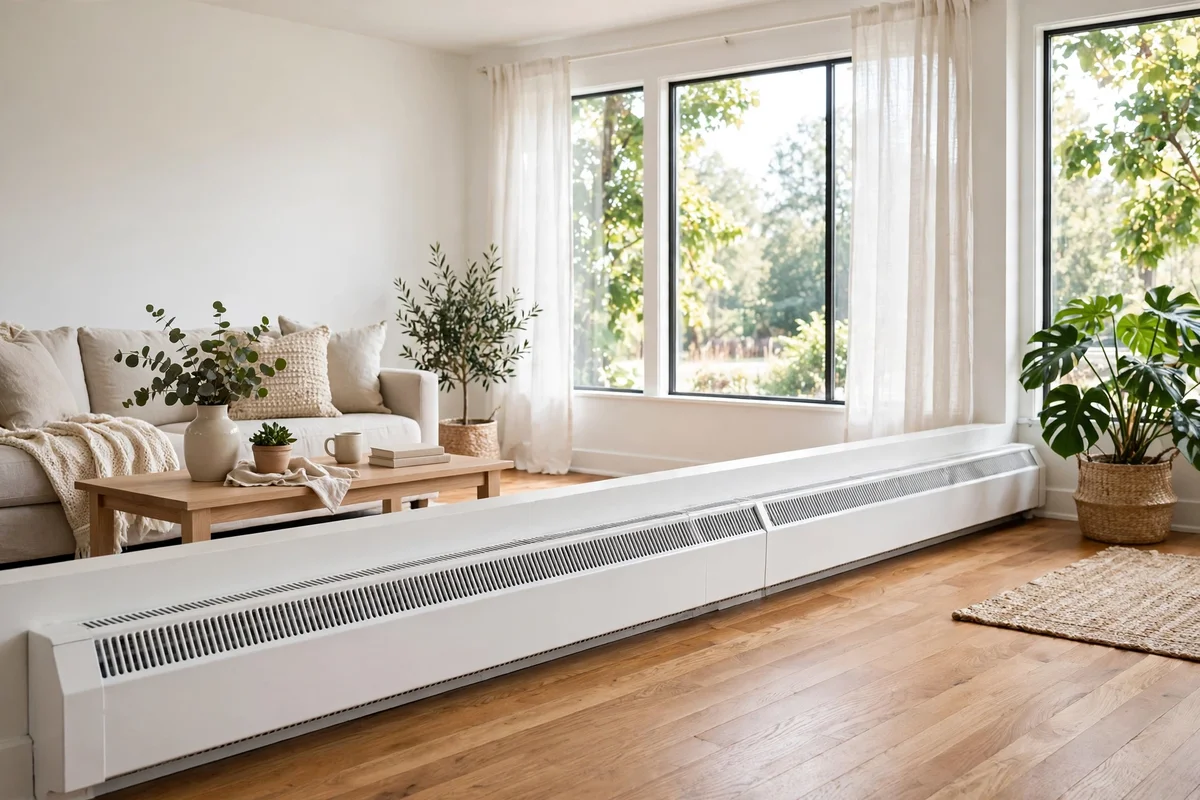
Hot water systems run quietly and respond well to modern controls. A thermostat can call for heat in one zone while another stays cool, and the boiler can modulate, or turn its output up and down, to match demand. That flexibility is why most new boiler installs in Delaware use hot water rather than steam.
Hot water systems need pressure watched instead of water level. Air in the radiators causes cold tops, and sludge in the pipes slows circulation, so bleeding radiators and keeping the water clean matter. A well-kept hot water system is a calm, even heater that asks little of its owner beyond an annual check.
Not sure what your system needs?
Call (302) 555-0147Older homes in Wilmington, New Castle, and Newark often already have steam pipework, tall radiators, and one-pipe layouts built for steam. Keeping steam in such a home is usually simpler and less disruptive than converting, since conversion means new pipework, new radiators or baseboards, and a new boiler.
Conversion makes sense in some cases, usually during a large renovation when walls and floors are already open. Hot water brings zone control and quieter operation, and it pairs well with modern boilers. The cost and disruption are real, though, so the decision should rest on the condition of the existing pipework, not on fashion alone.
If your home already has one system, the wisest path is usually to keep it healthy rather than swap it. We work on both steam and hot water systems across Delaware, and we will tell you honestly when a system is worth keeping and when change is the better investment. Call us to talk through what your home has and how it is behaving.
Steam upkeep centers on water level, vents, and traps. Air vents on radiators let air escape so steam can enter, and steam traps on returns keep steam in the radiators while letting condensed water back. A vent that sticks or a trap that fails causes noise, uneven heat, or water hammer, and replacing those small parts restores calm quickly.
Hot water upkeep centers on pressure, air, and water quality. Radiators need bleeding when air collects, pumps and zone valves need checking as they age, and sludge needs flushing before it blocks circulation. An annual visit covers those items, and it also tests safety controls on both system types.
Both systems share one rule: do not ignore a change. New noise, uneven heat, water near the boiler, or a rising repair pattern all deserve a look while they are still small. Whether your home runs on steam or hot water, a prompt check protects the system and keeps your rooms comfortable through the Delaware winter. See also our Steam Boiler Services page for details on what that involves.
Yes, conversion is possible, but it is a large job. It usually means a new boiler, new pipework, and new radiators or baseboards, since steam pipes and radiators are sized for vapor, not pumped water. It makes most sense during a major renovation, when walls and floors are already open.
Yes, steam radiators run hotter, since steam carries more heat than liquid water at the same pressure. That is why steam radiators are often larger and more ornate, and why they need care around small children. Hot water radiators run cooler and give a steadier, more even warmth across the room.
Banging in a steam system, often called water hammer, usually comes from condensed water trapped in a pipe meeting incoming steam. It can also come from a failed trap or a radiator that has lost its slope. Occasional ticks are normal, but loud, repeated banging deserves a check before it damages pipes.
Steam heat moves heat as vapor that rises under its own pressure, while hot water heat moves heat as liquid pushed by a pump. Steam radiators run hotter and heat quickly, while hot water radiators run cooler and warm rooms more evenly. The two systems use different pipework, controls, and upkeep.
Steam boilers need a different kind of attention rather than simply more of it. Water level, air vents, and steam traps need regular checks, since a low water level or a stuck vent affects the whole system. Hot water boilers need pressure, air, and water quality watched instead. Both benefit from an annual visit.
Yes, if they are sound. Old steam radiators are heavy, durable, and often beautiful, and they can keep serving for decades with new vents and valves. Replace a radiator only when it leaks, is badly corroded, or no longer heats. Keeping good radiators saves disruption and preserves the character of an older home.
Many owners find hot water heat more even, since water temperatures stay steadier and zones can be controlled separately. Steam heat can feel warmer near the radiator and cooler across the room, and it cycles more sharply. Comfort depends on the home and the system condition as much as on the type itself.
Hot water systems are usually quieter, since pumped water makes little noise when air and sludge are kept out. Steam systems hiss as air vents, and they can knock when condensate collects in pipes. A well-kept steam system is still reasonably calm, but it will never be as silent as a good hot water system.
Yes, many hot water boilers heat tap water too, either through an indirect tank or, in a combi boiler, by heating water on demand. Steam boilers do not heat tap water in the same way, so homes with steam heat usually have a separate water heater. Ask us which arrangement your home uses.
Tell us what system your home has and how it is behaving. We will check it over and explain your options in plain terms.
Care for steam systems, from vents and traps to water level controls and older pipework.
Care for hot water systems, including pumps, zone valves, pressure, and circulation.
For radiators that leak, stay cold, or need replacing in either system type.
Last updated: October 26, 2026.