Boiler Maintenance and Tune-Up
Seasonal visits that sample water and clean filters alongside boiler checks.
Learn more →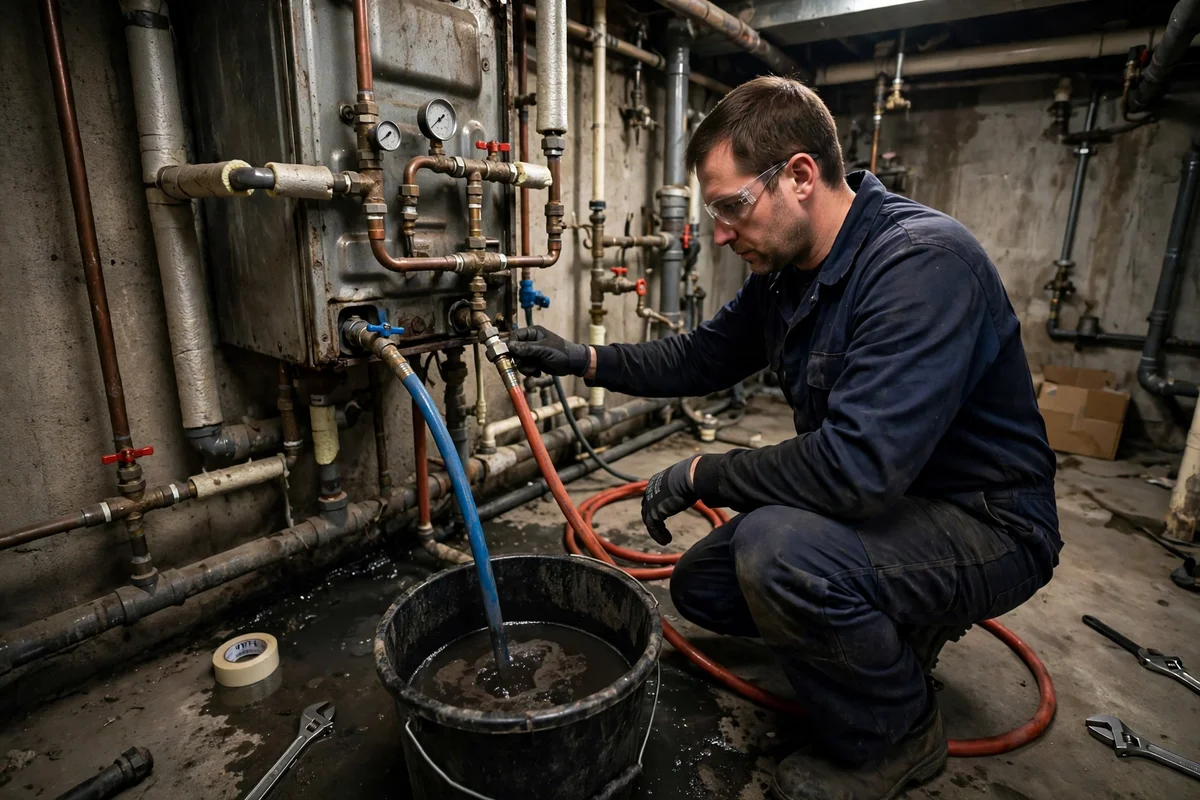
Heating water carries whatever the system has collected: sludge, scale, and air. When that water turns dirty, radiators heat halfway, pumps strain, and boilers wear sooner.
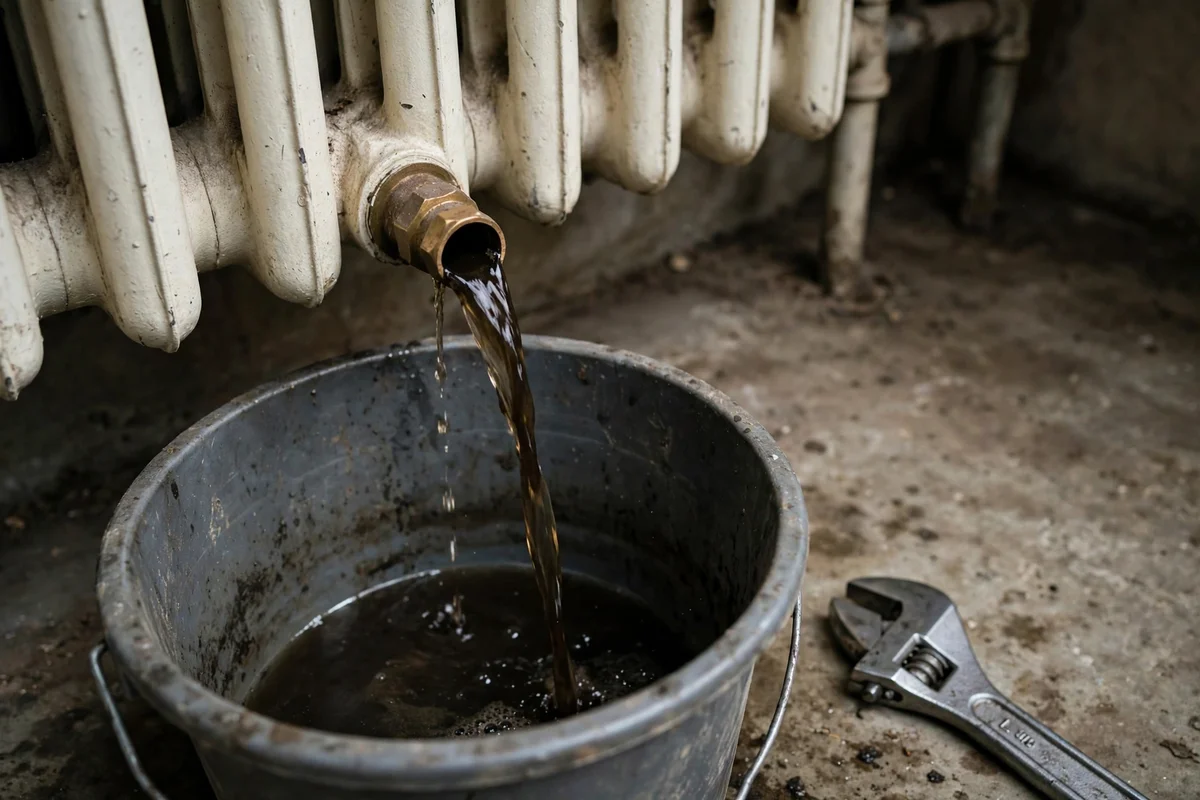
Sludge is the black, magnetic debris that forms when steel radiators corrode in system water, and scale is the hard deposit that forms where hard water meets heat. Together they narrow pipes, block radiator channels, and coat heat exchangers. Tell us which radiators heat unevenly and what color bled water looks.
A radiator with sludge at its bottom cannot circulate water through its lower channels, so it heats at the top and stays cold below, no matter how well the boiler runs. A pump pushing against sludge works harder, runs hotter, and wears sooner. A heat exchanger coated in scale transfers heat poorly, so the burner fires longer for the same room warmth and the boiler cycles more. Zone valves and thermostatic valves also suffer, because debris lodges in their small passages and leaves them stuck open or closed. The system as a whole drifts toward uneven rooms, higher fuel use, and more breakdowns, all from water that looks harmless until it is drained and seen.
Water quality problems build slowly, which is why they are easy to miss. A system filled with untreated water, topped up repeatedly through a leak, or left without treatment after a repair will accumulate debris season by season. Fresh water added through topping up brings oxygen that feeds corrosion, so a leak that causes frequent topping up also accelerates sludge formation. That link matters: fixing a leak and flushing the system belong together, because flushing a system that still leaks simply starts the sludge cycle again.
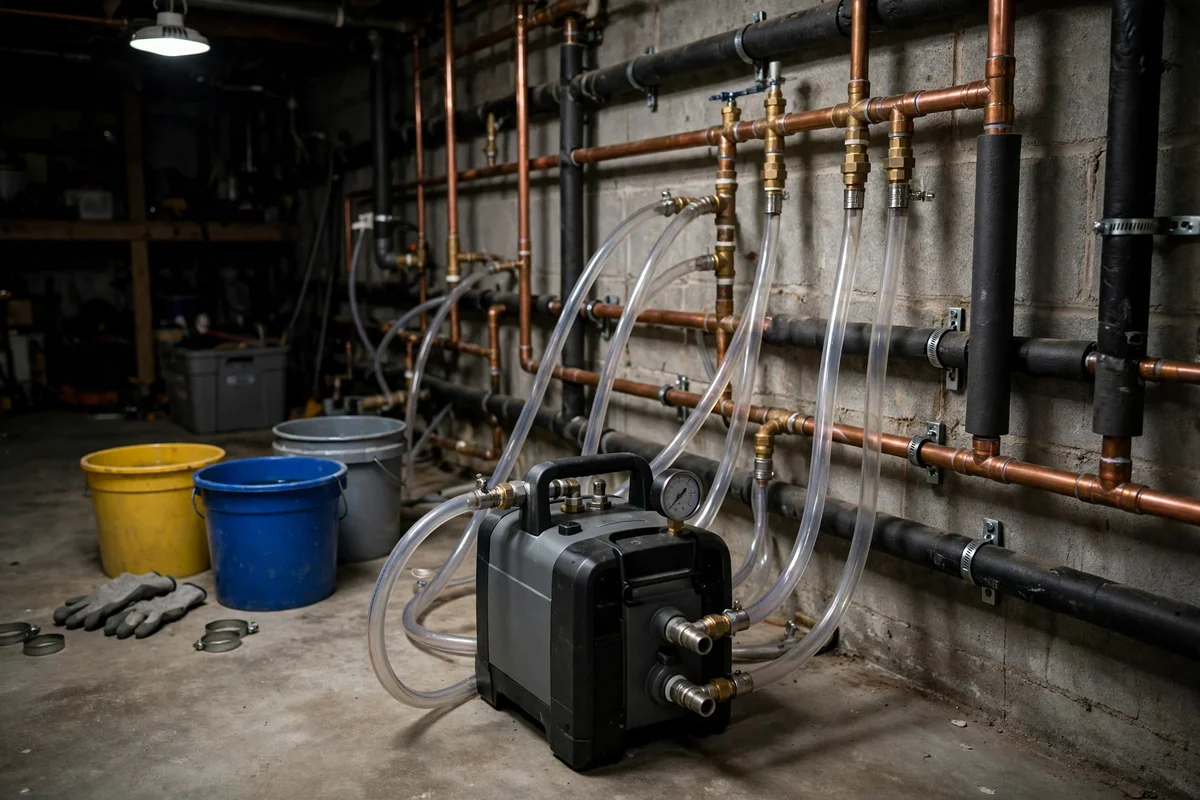
A power flush drives water through the system at high flow, loop by loop, carrying debris out through a filter and discharge point. It is a methodical job, not a quick drain and refill. Tell us which radiators heat unevenly before the flush starts.
We start by checking the boiler, pump, valves, and emitters, and by noting which radiators heat unevenly, so the flush can be judged against a clear before picture. The flush pump is connected, usually at the boiler or pump position, and each radiator or loop is flushed in turn, with flow reversed to dislodge debris from both directions. A filter captures debris as it leaves, and we watch the discharge water change from dark to clear, loop by loop. Stubborn radiators are agitated individually where the design allows, and valves are worked during the flush so debris trapped in valve passages is carried out as well.
After flushing, the system is refilled with clean water and treatment chemicals that inhibit corrosion and, where needed, address scale. A magnetic filter, where fitted or agreed, captures future debris before it reaches the boiler and pump, and it is cleaned during future visits. We then run the system, balance radiators, and check temperatures room by room, comparing the after picture with the before picture. A successful flush shows radiators heating evenly top to bottom, a pump running quietly, and water that runs clear when sampled. We explain the treatment added and what it does, so the protection is understood rather than mysterious.
Radiators cold at the bottom? Call (302) 555-0147 and talk through a system flush.
Call (302) 555-0147Flushing helps systems with sludge, uneven radiators, noisy pumps, and slow heat-up, provided the underlying faults are also addressed. It does not fix a failed pump, a stuck valve, or a leaking joint on its own, and we say so plainly when that is the case.
A system with several cold-bottom radiators, dark water on bleeding, and a pump that strains is a strong flushing candidate, especially if the boiler and emitters are otherwise sound. A system with a single cold radiator may need that radiator flushed individually, or a valve repair, rather than a full system flush. A system with a major leak needs the leak repaired first, because fresh topping-up water will undo the benefit of clean water quickly. A system with a failed heat exchanger or a cracked boiler section needs repair or replacement before flushing, because clean water cannot restore a broken part. We assess the system before recommending a flush, and we explain the expected benefit in terms of the symptoms you reported.
Older systems need a careful approach. Very old radiators with thin walls or fragile joints can leak when high-flow flushing disturbs long-settled debris, and we flag that risk before starting, especially where radiators already show corrosion. In those cases, a gentler flush, individual radiator work, or a staged approach may be wiser than a full-power flush. That honest conversation protects both the system and the owner from a flush that creates a new problem while solving an old one. Emitter work that pairs with flushing is covered on our radiator repair and installation page.
System water looking dark? Call (302) 555-0147 and ask about water treatment.
Call (302) 555-0147Clean water stays clean only if the system stays sealed, treated, and filtered. A flush without follow-up care is a temporary improvement, not a lasting fix. Note radiators that start heating unevenly again and report them early. Tell us about filter cleaning dates and debris trends.
Fix leaks promptly, because every top-up adds oxygen and fresh minerals that feed corrosion and scale. Check the magnetic filter during maintenance visits, and ask for a water sample check when the boiler is serviced, so treatment levels and clarity are tracked over time. Note radiators that start heating unevenly again, because early sludge return points to a leak, a treatment lapse, or a filter that needs cleaning. Keep the boiler maintenance visit in the calendar, and ask for water condition to be part of that visit alongside burner and control checks, as covered on our boiler maintenance and tune-up page.
Treatment chemicals are not a one-time magic addition: they deplete slowly and are diluted by topping up, so they need checking and replenishing as part of steady care. We note the treatment added during the flush, so future visits can check it rather than guess. We serve homes and businesses across Delaware, and our service areas page shows where we work. Clean water, sealed joints, and steady checks give radiators and boilers the conditions they need for long, even service.
A filter fitted after flushing captures debris before it reaches the boiler and pump, and it turns a one-time clean into lasting protection, provided the filter itself is cleaned on schedule. A neglected filter eventually blocks flow itself. Tell us about debris quantity and color at each cleaning.
Magnetic filters capture iron sludge, which forms the bulk of heating system debris, while inline strainers capture larger non-magnetic particles that a magnetic filter misses. Filter position matters: a filter on the boiler return protects the boiler and pump from debris circulating from radiators, while a filter that is hard to reach will not be cleaned, no matter how good its design. During maintenance visits we open the filter, note the debris quantity and color, and clean it thoroughly, because debris trends tell us whether the system is staying clean or sludging again. A filter that fills quickly between visits points to ongoing corrosion, a leak admitting fresh water, or treatment that has depleted, and each of those causes needs attention beyond filter cleaning. Keep a note of filter cleaning dates with the boiler record, so the trend is visible season by season.
Cold radiator bottoms, uneven rooms, dark water when bleeding, a noisy pump, and slow heat-up together point to sludge. A single cold radiator may need individual attention instead. We sample water and check radiators before recommending a full flush. Radiator patterns and water color are worth noting when you call.
Flushing fixes cold radiators caused by sludge and debris. It does not fix a stuck valve, a failed pump, a balancing fault, or a leaking joint, and those faults need their own repairs. We diagnose the pattern first, so flushing is recommended only where it addresses the cause.
There is no fixed interval for every system. A sealed, treated system with a filter may go many seasons without a flush, while a leaking or untreated system may need attention sooner. Water sampling during maintenance visits gives a better guide than a calendar alone.
A power flush uses a pump to drive water through the heating system at high flow, loop by loop, carrying sludge and debris out through a filter. Flow is reversed to dislodge debris from both directions, and radiators are checked individually during the process.
Very old or corroded radiators carry some risk, because high-flow flushing can disturb settled debris and expose weak joints. We assess radiator condition first and flag that risk, using a gentler or staged approach where full-power flushing would be unwise.
A flush usually takes most of a working day, depending on radiator count, loop layout, and how dirty the water is. We explain the expected duration after inspection, once radiator count and system layout are known. Radiator count, loop layout, and water dirtiness are worth noting during inspection.
Corrosion inhibitor is added to protect steel radiators and boiler parts, and scale treatment where water hardness calls for it. We note the treatment added so future visits can check levels rather than guess, and we explain what each treatment does.
A magnetic filter captures iron debris before it reaches the boiler and pump, and it is cleaned during maintenance visits. It suits most systems, especially those that have sludged before, and it helps clean water stay clean between visits. Radiator heat patterns and water color are worth noting between visits.
Flushing can restore heat transfer and even radiator heat, which helps a system run more steadily and cycle less. The gain depends on how dirty the system was: a heavily sludged system improves noticeably, while a clean system gains little from flushing.
Tell us which radiators heat halfway and what color the bled water looks, and we will assess the system.
Seasonal visits that sample water and clean filters alongside boiler checks.
Learn more →Emitter repairs for radiators that stay cold after flushing.
Learn more →Water quality work for steam systems, where foaming and carryover matter.
Learn more →Last updated: October 26, 2026.