Steam Boiler Services
Steam heat still warms many Wilmington rowhouses, and it needs vents, traps, and water levels handled its own way.
Learn more →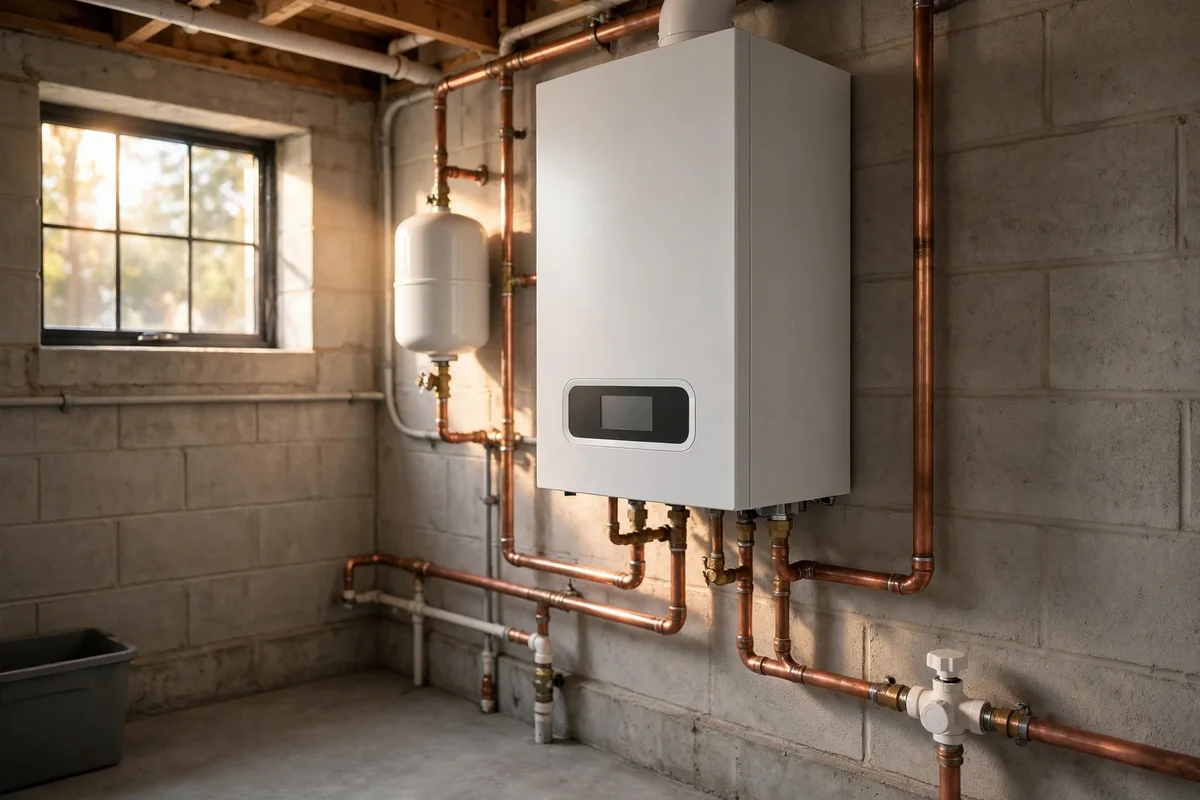
Wilmington homes run on boilers of every age, from steam systems in old rowhouses to new condensing units in Riverfront condos. We repair, replace, and maintain them across the city, and we size every job to the house it heats.
We work across Wilmington, from the brick rowhouses near Trolley Square to the stone houses of the Highlands and the twins of Forty Acres. Each pocket of the city heats a little differently, and we treat it that way, matching the boiler and the radiators to the rooms they serve.
In Brandywine Hills and Wawaset Park, mid-century houses often carry hot water baseboards fed by a single boiler in the basement, and the complaint we hear most is one cold room at the far end of the run. Around Browntown and Southbridge, older two-pipe steam systems still do the work, and the radiators there need valves and vents that suit steam, not hot water. Little Italy and the East Side mix both worlds, with converted houses where a boiler added decades ago now feeds radiators, baseboards, and an indirect tank all at once. Baynard Village brings larger stone and brick homes with zoned loops, where one thermostat rarely tells the whole story.
Wilmington ZIP codes tell the same story in shorthand. Homes in 19801 near downtown and the Riverfront include condos with compact wall-hung boilers tucked into closets. In 19802 and 19805, older housing stock means cast iron radiators and basement boilers that have outlived several owners. Out in 19806 around Trolley Square and Wawaset Park, and 19809 toward Brandywine Hills, the houses get bigger and the systems get more zones.
Wilmington winters bring long damp cold spells, and a boiler that limps through November usually fails on the coldest January night. Moisture from the Christina River and Brandywine Creek keeps basements humid, which rusts fittings and lets air collect in high radiators.
The pattern shows up in symptoms you can spot. A boiler that short-cycles on mild days but cannot hold temperature when the wind picks up off the river usually has a control or circulation problem, not a size problem. Radiators that gurgle after a cold snap often hold trapped air that expanded and contracted with the weather. Basement dampness leaves its mark as rust on valves and flaking paint on iron pipe, and that corrosion eventually narrows a pipe or seizes a valve shut. The ENERGY STAR boilers page at energystar.gov/products/boilers explains boiler types and efficiency in plain terms, and it is a useful read before you choose a replacement.
We plan maintenance around that cycle. A late-summer tune-up catches stuck pumps, tired vents, and weak ignition before the heating season starts, and a midwinter check looks for the strain that only sustained cold reveals. When a Wilmington boiler loses pressure after a freeze, we look first at the expansion tank and the relief valve, because both take the brunt of water expanding and contracting. Small habits help as well: keeping basement vents clear, wiping down a sweating pipe, and calling when a radiator stays cold for more than a day, rather than waiting for the whole house to go cold.
Radiators cold upstairs in Wilmington? Call us and describe what your boiler is doing.
We repair boilers, replace them when repair stops making sense, and look after the radiators, baseboards, and controls that carry heat through a Wilmington home. Our work covers steam and hot water systems, gas and oil units, and the indirect tanks that make domestic hot water from the same boiler.
Repair visits usually start with the symptom and work backward. A boiler that locks out, a pilot that will not stay lit, a pressure gauge that climbs too high, or a house where the downstairs roasts while the upstairs shivers: each points to a different part of the system, and we test before we replace parts. Radiator work follows the same rule. A cold radiator might need a vent, a valve, or a balance adjustment, and we check the whole loop before deciding, because one radiator rarely misbehaves alone. When replacement is the right call, we size the new boiler to the radiators and the heat loss of the house, not to the size of the old unit, since Wilmington houses have changed with insulation, windows, and additions since the original boiler went in. You can browse the full range of work on our services page, which covers installation, replacement, maintenance, steam systems, hot water systems, radiators, and controls.
Commercial buildings get the same treatment at a bigger scale. Riverfront offices, small shops along Market Street, and the older apartment buildings near Rodney Square run larger boilers with more zones, and a failure there affects tenants, not just one family. We service those systems with the same room-by-room approach, checking each zone and each loop, and we talk through what the building needs in plain language, without jargon.
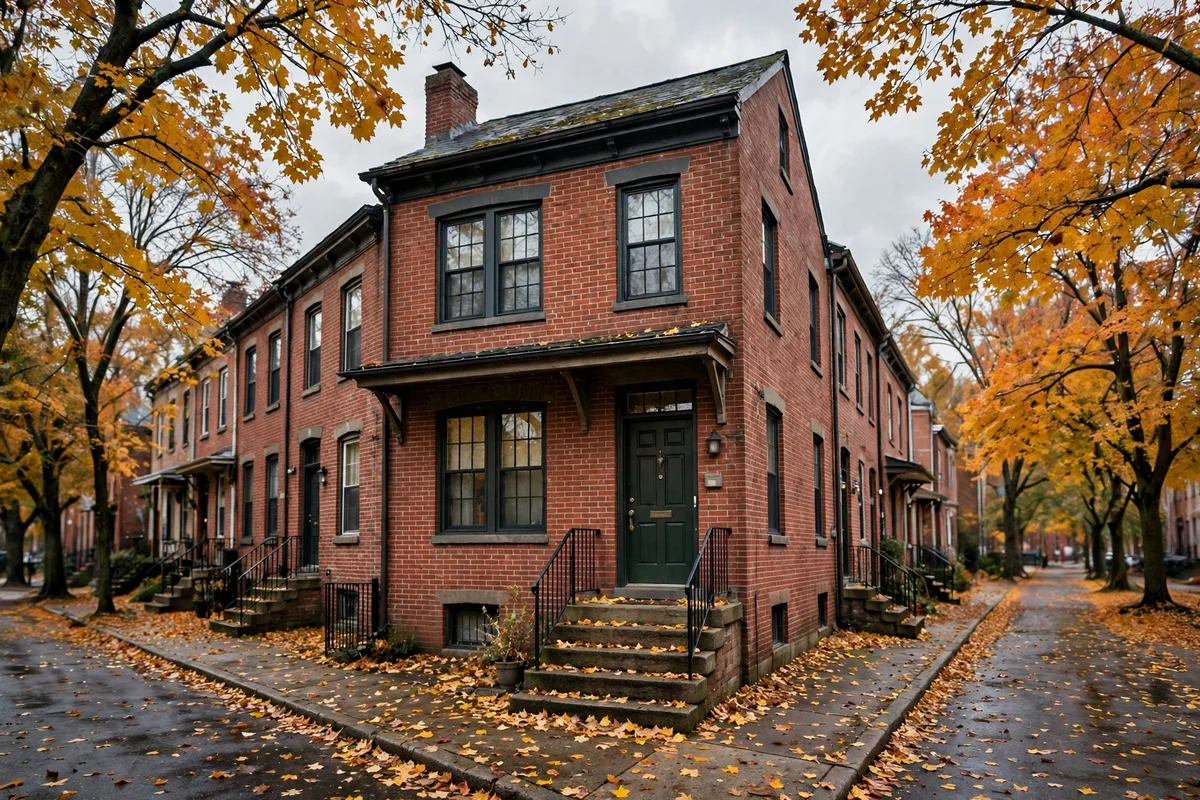
Wilmington housing spans three centuries of building, and each era left a different heating system behind. The oldest rowhouses near downtown still run on steam, the postwar twins run on hot water, and the newest condos run on sealed, high-efficiency units.
Steam houses deserve special attention because steam is unforgiving of small mistakes. A vent that fails open hisses all day and wastes heat, while a vent that fails closed leaves a radiator stone cold. Old iron pipe in these houses also sheds scale into the boiler, so flushing and water treatment matter more here than in a new system. Postwar houses in Forty Acres and the Highlands often have the opposite problem: a boiler sized for drafty single-pane windows now short-cycles in a house that has been insulated and re-windowed, which wears parts faster and leaves rooms uneven.
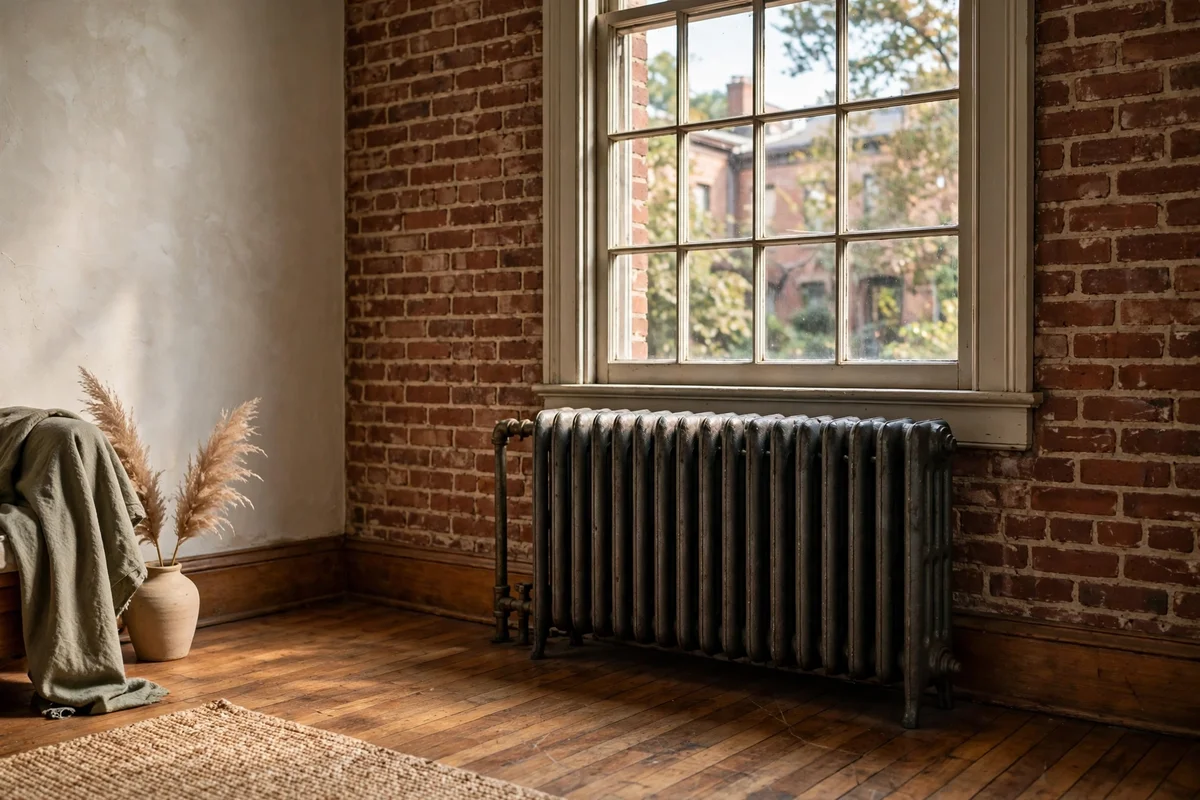
Materials tell us what to expect before we open a panel. Cast iron radiators hold heat long after the boiler stops, so a house with them feels warm even when the system cycles. Copper baseboards respond fast but show every air bubble as a gurgle. Galvanized pipe from the middle of the last century narrows with scale, and we watch water quality in Wilmington homes for that reason, since mineral buildup quietly shrinks a pipe from the inside. Knowing the era of the house helps us choose parts that fit, valves that match, and a maintenance rhythm that suits the system.
Most Wilmington customers find us by the landmarks they already use every day. If you live near Rodney Square, Brandywine Park, or the Riverfront, you already know the shape of the city, and describing your home by the nearest landmark helps us plan the visit.
Orientation matters on a service call because Wilmington streets can confuse even longtime residents. The Riverfront sits along the Christina River at the east edge of downtown, with restaurants like Big Fish Grill and Banks Seafood Kitchen drawing crowds along Justison Street. Trolley Square anchors the west side with its shops and the streets of the Highlands beyond it. Brandywine Park runs along the creek north of downtown, and the Delaware Art Museum sits nearby on Kentmere Parkway. When you book, a landmark like one of these, plus your neighborhood, tells us which side of the city you are on and which routes to take. For travelers, Wilmington Airport sits just south of the city in New Castle, and Philadelphia International Airport is the nearest large airport, about a half hour north. ChristianaCare Wilmington Hospital serves the city itself, on the west side near the Highlands.
A call from the East Side and a call from Brandywine Hills are different trips, and we plan the day so neither waits on the other. If your boiler stops during a cold spell, tell us the symptom, the neighborhood, and the nearest cross street, and we will talk through what to check while we arrange the visit.
Wilmington boilers work hardest from November through March, rest through the summer, and fail most often at the two changeovers. A seasonal rhythm of checks keeps those changeovers uneventful. Spring checks catch what winter left behind, and autumn checks catch what summer idleness caused.
Spring is the time to look at what winter left behind. We check vents that hissed all season, valves that wept, and radiators that never quite warmed, and we flush sediment that settled during months of steady running. Summer is for bigger decisions, because a replacement or a zone addition is far easier to fit when the boiler is idle and the house is warm. Autumn is the real test: we fire the system, bleed every radiator, test the controls, and watch a full heat cycle from cold start to shutdown, so the first cold night does not become the first surprise. Winter itself is for watching: a pressure gauge that drifts, a new noise from the circulator, or a room that cools first all deserve a call while the problem is still small.
Keep radiators clear of furniture and heavy curtains so heat reaches the room, and keep the boiler area clear of stored boxes so air can move around the unit. None of this takes long, and all of it stretches the life of a system that Wilmington winters ask a great deal of.
Gurgling usually means air trapped in the loop, and Wilmington winters make it worse. As the boiler heats and cools, air collects at high radiators and in the top of the loop. Bleeding the radiator often quiets it, but if the noise returns within days, the system may be drawing air in through a fitting or the expansion tank may need attention.
Yes, steam is a large part of Wilmington heating, especially in the older rowhouses around Trolley Square, the Highlands, and downtown. Steam systems need vents, traps, and water levels handled differently than hot water systems, and parts that suit one will not suit the other. We test vents and traps, check the water level and pressure, and balance radiators so each room warms evenly.
A single cold room usually points to balance, air, or a valve rather than a failing boiler. In Forty Acres twins, the farthest radiator sits at the end of the longest pipe run, so it gets heat last and loses it first. A stuck valve, trapped air, or an unbalanced loop can all leave one room behind.
We start from the breakdown pattern. A boiler that needs one repair after years of steady service is usually worth fixing, since a single fault says little about the whole unit. Repeated failures, leaking joints, or pressure that will not survive a cold week say more. We check the boiler, the radiators, and how the house has changed, then talk through the options together.
Wilmington water comes from surface sources around the Brandywine Creek, and like most city water it carries minerals that leave scale inside a system over time. Scale narrows older iron and galvanized pipe, coats heat exchangers, and makes a boiler work harder for the same heat. Flushing the system and treating the water slows that buildup.
Damp air rusts fittings, corrodes valves, and shortens the life of controls and igniters. Basements near the Christina River run damper than those on higher ground, so the effect shows up faster there. Keeping the boiler area ventilated, wiping down sweating pipes, and running a dehumidifier through humid months all help, and we check for rust damage during maintenance visits.
Tell us what your boiler is doing, which neighborhood you live in, and what changed before it started. We will talk through the next step and arrange a visit.
Steam heat still warms many Wilmington rowhouses, and it needs vents, traps, and water levels handled its own way.
Learn more →Cold, noisy, or leaking radiators in Wilmington homes, from cast iron originals to new panel radiators.
Learn more →A seasonal check that catches stuck pumps, tired vents, and weak ignition before Wilmington winter arrives.
Learn more →Last updated: October 26, 2026.