Radiator Repair and Installation
Emitter repairs that restore heat to rooms a sound boiler already serves.
Learn more →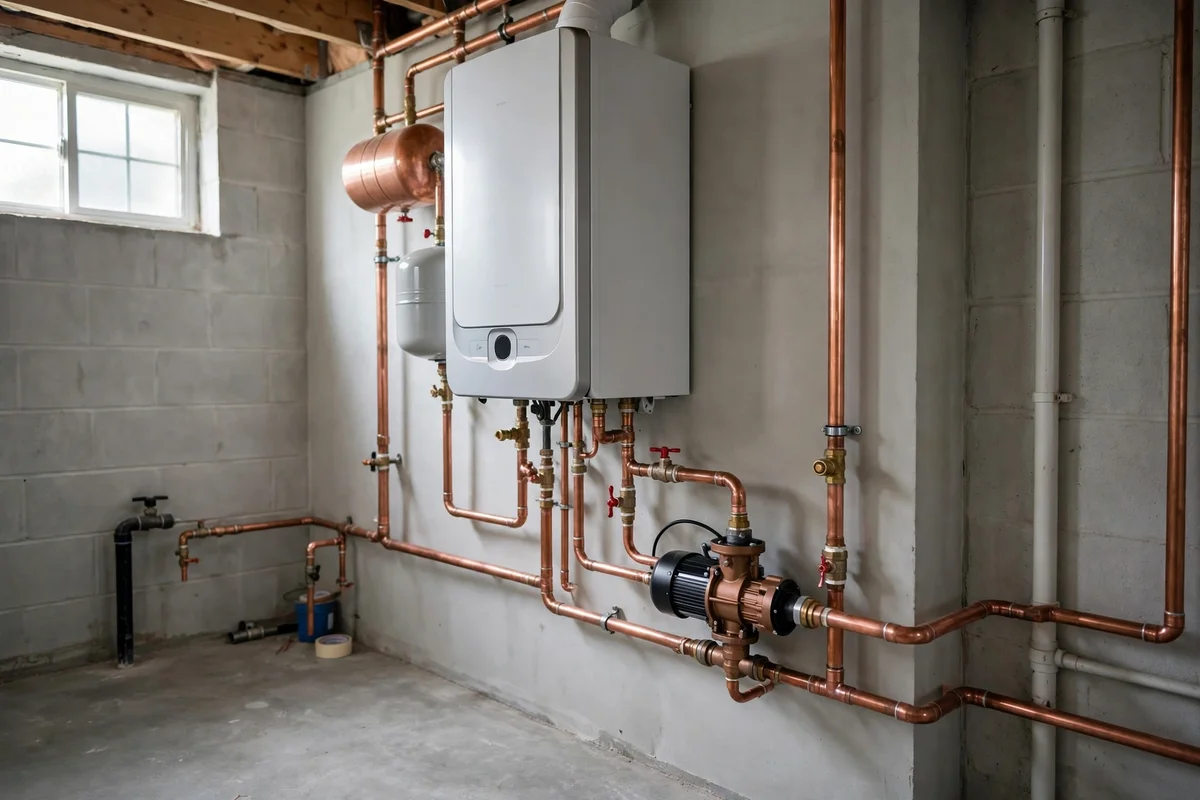
Most Delaware homes with radiators or baseboards run on a hot water boiler. We repair, tune, and care for those systems, from the burner to the farthest radiator.
A hot water boiler heats water and a pump circulates that water through pipes to radiators, baseboards, or radiant floors. The water gives up heat in each room, cools slightly, and returns to the boiler to be heated again. Tell us which rooms heat well and which stay cool.
That loop depends on three things working together: a burner that fires cleanly, a pump that moves water at the right rate, and emitters that can release heat into rooms. If the burner fires but the pump stalls, rooms stay cold. If the pump runs but the burner short cycles, rooms swing warm and cool. If emitters are airlocked or blocked, water bypasses them and returns hot, fooling the boiler into shutting down early. Diagnosis means checking each part of the loop in turn, not assuming the boiler alone is at fault. We start at the boiler, then follow the flow through zone valves, pumps, and pipe runs to the rooms that complain.
Controls tie the loop together. A thermostat calls for heat, an aquastat or outdoor reset sets the water temperature, and zone valves open only the zones that need heat. A faulty thermostat, a stuck zone valve, or an aquastat set wrongly can leave one part of a building cold while another overheats. During a visit we test controls through a full cycle, watching valves open, pumps start, and water temperatures rise, so the fault is found in the system as a whole rather than in a single part in isolation.
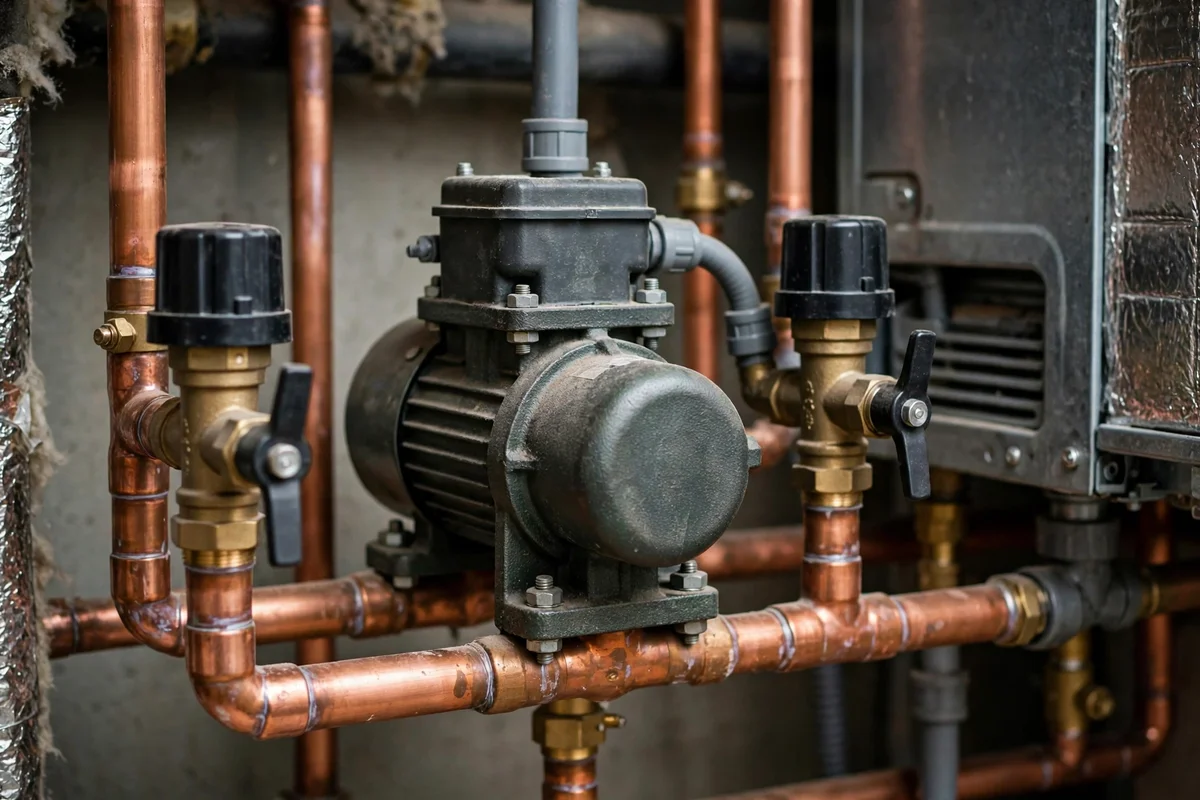
Hot water systems fail in patterns, and those patterns point to the faulty part. Owners who can describe the pattern help us arrive prepared and fix the fault in one visit more often. Describe the pattern, including pressure readings and radiator temperatures, when you call.
Pressure problems are the most common. A system that loses pressure steadily usually has a leak, a failing expansion tank, or a relief valve passing water. A system whose pressure climbs as it heats usually has an expansion tank that has lost its air charge or a filling valve letting water in. Air in the system shows up as gurgling radiators, cold tops on radiators, and a pump that sounds strained. Sludge shows up as cold bottoms on radiators, uneven rooms, and a pump that struggles. A burner that lights and then drops out points to ignition, flame sensing, or venting faults that need testing, not repeated resetting.
We repair the cause, not just the symptom. A leaking joint is repaired and the system is pressure tested. A failed expansion tank is replaced and the system is set to the correct cold pressure. Air is vented and the cause of air entry is checked, whether that is a leak, a faulty vent, or a pump drawing air in. Sludge is addressed with flushing where the water condition calls for it, and you can read about that work on our system flushing and water treatment page. After repair, we run the system and check rooms in turn, because a hot water system is only fixed when heat reaches every emitter evenly.
Hot water boiler not heating evenly? Call (302) 555-0147 and describe the pattern.
Call (302) 555-0147The pump and zone valves are the moving heart of a hot water system, and they wear in ways that are easy to misread as boiler faults. A boiler that fires well but heats poorly often has a pump or valve problem.
A circulator pump can fail outright, run slowly, or seize after a summer idle. A seized pump leaves the boiler firing into still water, which trips safety controls and leaves rooms cold. A slow pump leaves far rooms cool while near rooms overheat. Zone valves can stick open, heating rooms that never called for heat, or stick closed, leaving a whole zone cold while the thermostat calls in vain. We test pumps by flow, sound, and temperature change across the pump, and we test zone valves by watching them open and close on a thermostat call. Replacing a pump or valve is straightforward once the fault is proven, and we explain the test result before fitting a part.
Balancing ties pumps and valves together. Radiators near the boiler naturally take more flow than far ones, so lockshield valves are adjusted to share flow fairly. An unbalanced system wastes fuel and leaves rooms uneven, even with a new pump. We balance room by room, checking emitter temperatures as we go, and we note the settings so a future visit can check them quickly. Controls work that pairs with this, including thermostats and outdoor reset settings, is covered on our boiler controls and zone heating page.
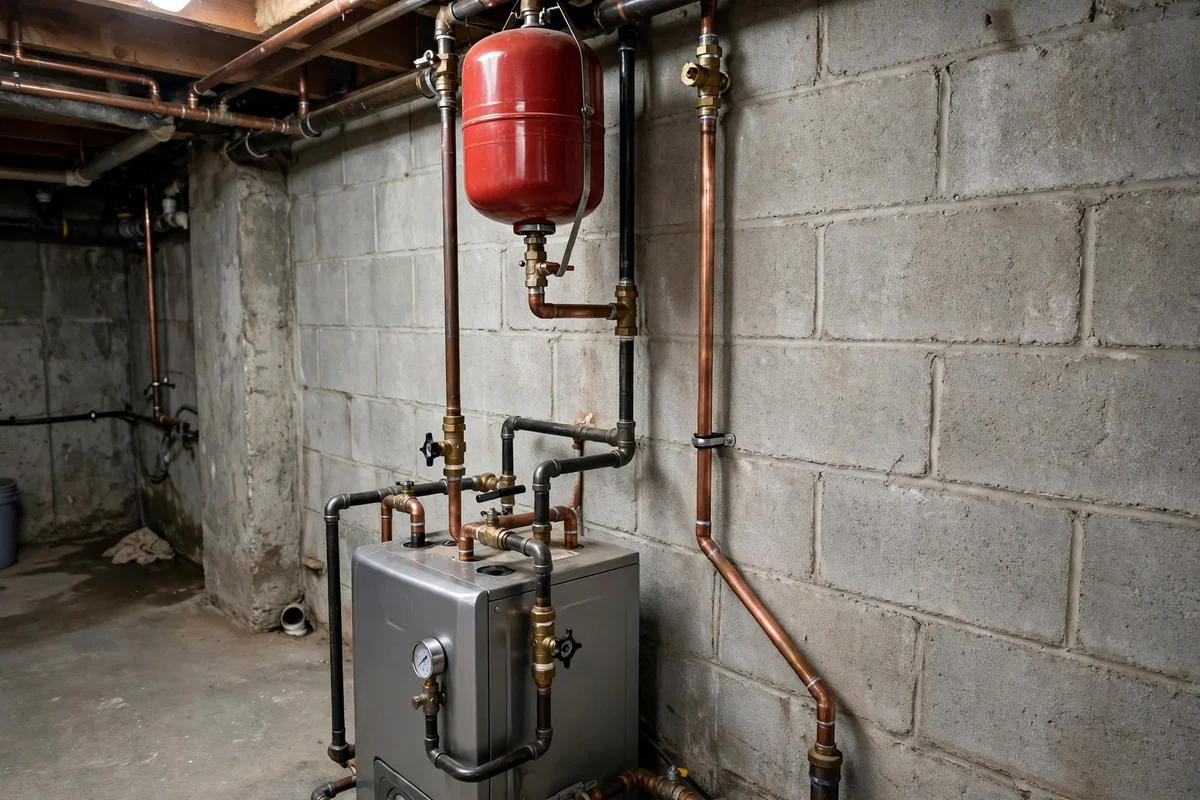
Pressure rising or falling on your boiler? Call (302) 555-0147 and tell us what the gauge shows.
Call (302) 555-0147A hot water system stays steady with clean water, correct pressure, and a seasonal check. Those three habits prevent most of the faults we are called to fix. Call sooner if pressure moves steadily or if rooms heat unevenly after balancing.
Check the pressure gauge from time to time and note whether it holds steady, falls slowly, or climbs when hot. A steady reading is a healthy sign. A falling reading points to a leak or a passing relief valve, and a climbing reading points to expansion or filling faults. Bleed a radiator only when its top feels cold while the bottom feels warm, and note radiators that need bleeding often, because frequent air points to a leak or a vent fault rather than normal operation. Keep the boiler room clear so leaks and drips are visible early.
Book a seasonal visit before winter to clean the burner, test safety controls, check the pump and expansion tank, and run the system through its zones. We serve homes and businesses across Delaware, and our service areas page shows where we work. Ask about boiler maintenance and tune-up for that seasonal visit, and call sooner if pressure moves steadily or rooms heat unevenly.
Expansion and relief parts protect a hot water system from pressure damage as water heats and expands, and they are easy to overlook because they sit quietly until they are needed. Understanding them helps owners spot trouble early. Tell us about relief discharge patterns when you call.
When water heats, it expands, and the expansion tank absorbs that extra volume so system pressure rises only modestly. If the tank loses its air charge or its diaphragm fails, pressure climbs sharply as the system heats, and the relief valve discharges water to protect the boiler and pipework. Occasional relief discharge on a very hot day may be a warning, while repeated discharge points to a tank or filling fault that needs repair. During a visit we check tank charge, relief valve condition, and discharge pipe route, confirming the pipe runs safely to a drain point without blockage. Never cap a relief discharge pipe or ignore repeated discharge, because the relief route is the system safety net, and a blocked route turns a pressure fault into a far more serious problem.
Pressure usually drops because of a leak, a relief valve passing water, or an expansion tank fault. Small drops after bleeding a radiator are normal, but a steady fall week by week points to a fault that should be found. We pressure test the system and check the tank and relief route to locate the cause.
Uneven radiators usually mean air, sludge, balancing, or a stuck zone valve. Air collects at radiator tops, sludge settles at bottoms, and unbalanced flow favors radiators near the boiler. We check each pattern in turn and fix the cause, rather than bleeding every radiator and hoping.
A hot water boiler runs on thermostat demand through winter, firing when rooms call for heat and resting when they reach temperature. It should not fire constantly in mild weather, and constant running points to a control, sizing, or heat loss problem worth investigating.
Cold pressure depends on building height and system design, so there is no single number for every home. What matters is that pressure holds steady when cold and rises only modestly when hot. A reading that falls steadily or climbs sharply points to a fault worth checking.
Steady pressure loss usually means a leak somewhere in the system, a relief valve passing water, or an expansion tank that has failed. We check joints, emitters, the relief route, and the tank to find the source, then repair it and reset the system pressure.
Gurgling usually means air trapped in the system. Air can enter through a leak, a faulty vent, or a pump drawing air in. Bleeding the radiator helps for a day, but finding and fixing the air entry point stops the gurgling from returning.
Short cycling can come from an oversized boiler, a pump or flow problem, a faulty thermostat, or a control set wrongly. We test flow, controls, and burner operation to find which one is cutting the cycle short, because each cause needs a different fix.
Often, yes. Adding a zone usually means new pipework, a zone valve, and a thermostat for the new area, plus balancing so existing zones still heat well. We survey the pipework and pump capacity first and explain what the addition involves.
Yes. We work on hot water boiler systems in homes and businesses across Delaware, from a single-zone home system to a multi-zone building system with several pumps and valves. Zone count, pump positions, and building size are worth noting during the survey.
Tell us which rooms heat and which stay cold, and we will trace the fault through the system.
Emitter repairs that restore heat to rooms a sound boiler already serves.
Learn more →Baseboard emitters, valves, and balancing for hot water systems.
Learn more →Thermostats and zone valves that direct hot water where it is needed.
Learn more →Last updated: October 26, 2026.