Boiler Replacement
Planned replacement work that shares survey, sizing, and commissioning steps.
Learn more →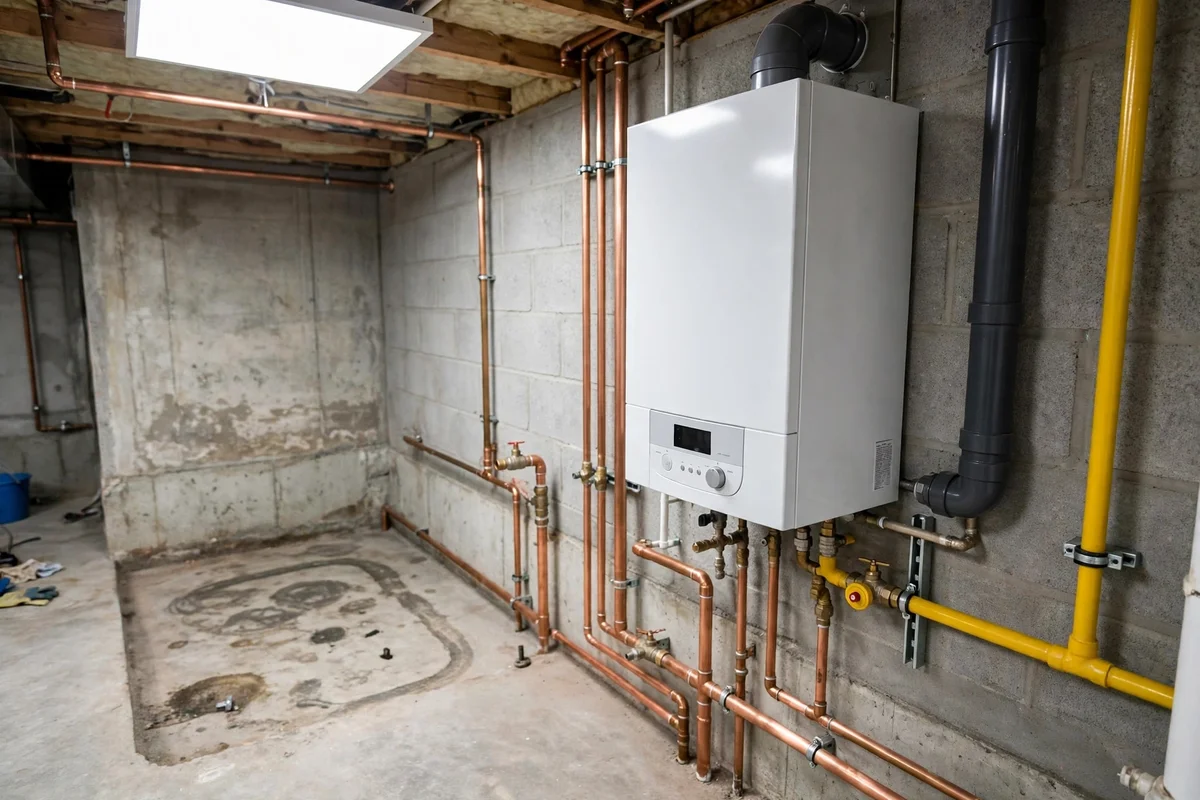
Switching a home from oil heat to gas heat means a new boiler, a gas supply, new venting, and a plan for the old oil tank. We handle the boiler side and explain the tank side clearly.
An oil-to-gas conversion replaces the oil boiler with a gas boiler, connects a gas supply, fits a gas flue route, and leaves the oil tank and oil pipework to be dealt with under a separate plan. It is several jobs in sequence, not a single swap.
The gas supply comes first in planning, because a conversion cannot proceed without it. A home on a gas main needs a gas service run and a meter, arranged with the gas utility, while a home without a main may need a propane tank arrangement instead, which changes the boiler setup and fuel storage picture. Gas pipework inside the home must be sized for the new boiler and any other gas appliances, and it must be pressure tested before the boiler is commissioned. The new gas boiler is then fitted, with a flue route suited to gas combustion and a condensate drain where a condensing model requires one. Radiators and pipework usually stay, provided they suit the new boiler water temperatures, and controls are checked and updated where the old oil controls do not match the new gas unit.
Timing matters because the gas service, the boiler install, and the tank plan each involve different parties and different lead times. We explain the sequence plainly: gas utility work first, boiler install second, tank work alongside or after, with heating gaps planned around the changeover. A conversion booked without the gas supply confirmed is a conversion that stalls halfway, so we confirm supply availability before ordering the boiler or booking install days.
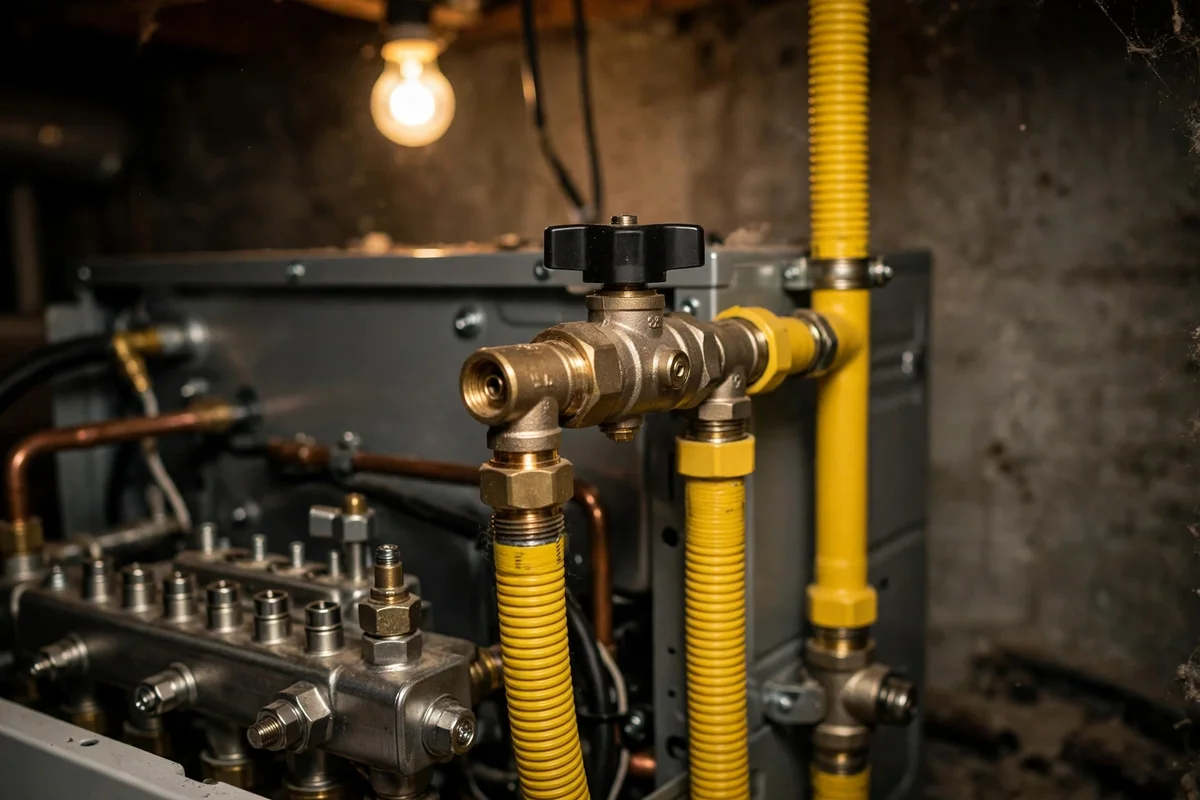
The new gas boiler should be sized to the building as it stands, not copied from the old oil boiler, because extensions, insulation, and window changes since the oil boiler was fitted have changed heat demand. Tell us about gas supply, tank position, and radiator condition during the survey.
We survey room sizes, insulation, windows, and emitter types, and we check hot water demand at the same time. A household that needs stored hot water may pair the gas boiler with an indirect tank, covered on our indirect water heater services page, while a smaller household may suit a combi gas boiler, covered on our combi boiler installation page. Condensing gas boilers suit most conversions, provided the flue route and condensate drain point work, and they pair especially well with lower-temperature emitters.
Venting deserves special attention in a conversion, because oil and gas flues differ. An old oil chimney or flue may be the wrong size, material, or condition for a gas boiler, and a condensing gas boiler needs a flue and condensate route that an oil boiler never had. We inspect the flue route during the survey and explain any chimney lining, flue replacement, or condensate work before install day, so venting does not become a surprise halfway through the job. Controls are updated at the same time, including thermostat and zone settings that suit gas boiler operation rather than oil burner cycles.
Thinking of leaving oil heat behind? Call (302) 555-0147 and talk through the conversion steps.
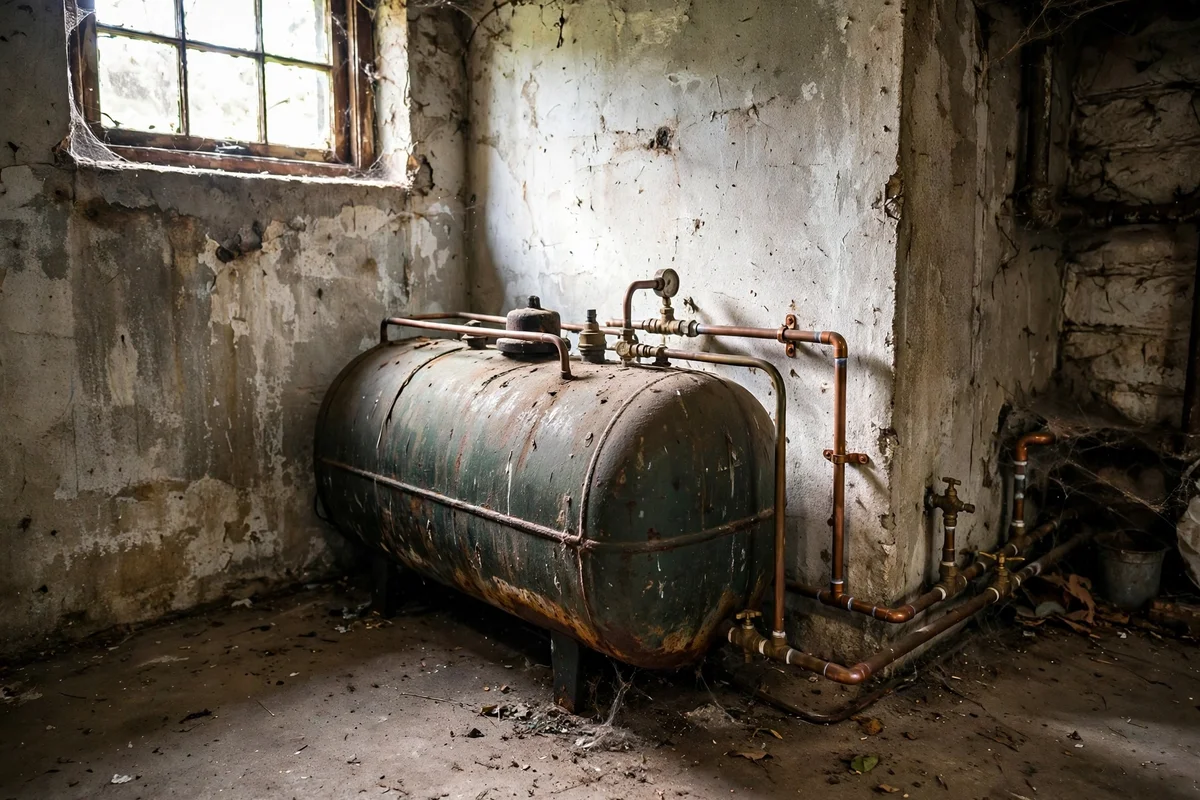
Call (302) 555-0147The oil tank is the part of a conversion that owners most often underestimate, because it sits outside the boiler job yet cannot simply be left and forgotten. A tank that stays full, half-full, or empty each carries its own considerations, and the right plan depends on tank type and location.
Above-ground tanks and underground tanks follow different rules and different removal or closure routes, and Delaware guidance matters here. The Delaware Department of Natural Resources and Environmental Control tank pages describe tank assistance and closure programs for heating fuel tanks, which are worth reading before deciding on a tank plan. Tank removal or closure-in-place usually involves a specialist tank contractor, soil checks where required, and paperwork that should be kept with the property records. We explain that the boiler team handles the boiler change, while tank work is arranged with the appropriate tank specialist, and we help you sequence the two so the boiler change is not held up by tank timing.
Oil remaining in a tank, oil pipework, and old oil filters also need handling. Remaining oil should not be left to sit indefinitely, and old fuel lines should be capped or removed as the tank plan requires, rather than left live. Keep every tank document, including closure reports and soil results where they apply, because a future buyer or insurer will ask for them. A conversion that ends with a documented tank plan is a conversion that is truly finished, while a conversion that leaves a tank undocumented leaves a question hanging over the property.
Gas main nearby but still on oil? Call (302) 555-0147 and ask what a switch involves.
Call (302) 555-0147Life with a gas boiler feels familiar in the rooms and different in the boiler room: no oil deliveries to schedule, no tank gauge to watch, and a boiler that responds to thermostats in the same way, with its own maintenance rhythm.
Book a seasonal gas boiler check covering burner, ignition, flue, condensate route, and safety controls, and ask about boiler maintenance and tune-up for that visit. Carbon monoxide safety deserves attention with any fuel-burning boiler, and the Environmental Protection Agency explains carbon monoxide sources in homes, including worn combustion equipment. Keep alarms in working order, note any new smells or burner behavior promptly, and never ignore an alarm that sounds: leave the building and call emergency services from outside first.
If radiators heat unevenly after the switch, the cause is usually balancing, air, or water quality rather than the fuel change itself, and our system flushing and water treatment page covers that work. We serve homes and businesses across Delaware, and our service areas page shows where we work. A conversion done in sequence, gas supply first, boiler second, tank documented last, gives a home steady gas heat without a lingering oil legacy.
Gas safety after conversion rests on habits that are simple but worth stating plainly, because a gas boiler brings different safety routines from an oil boiler, and owners converting for the first time may not know them. Tell us about alarm testing and vent condition during visits.
Keep the boiler room ventilated as designed, never block air vents or flue terminals, and keep flammable materials away from the boiler and flue pipework. Learn the smell added to natural gas, which signals a leak, and know the response: leave the building, call emergency services or the gas utility from outside, and do not switch lights or appliances on or off inside. Keep carbon monoxide alarms in working order, test them as the maker instructions direct, and never ignore an alarm that sounds. During maintenance visits we check flue condition, burner combustion, and safety controls, and we explain any reading that concerns us in plain words. A gas boiler that is ventilated, alarmed, and checked seasonally gives steady heat with the same calm routine as any well-kept heating system, and a new gas owner who knows the leak and alarm responses is prepared rather than anxious.
A gas main makes conversion straightforward, with a gas service and meter arranged through the utility. Without a main, propane storage becomes the alternative, which changes boiler setup and fuel arrangements. We confirm supply availability before ordering a boiler or booking install days.
Old tanks are removed or closed in place under a separate tank plan, usually by a specialist tank contractor, with soil checks and paperwork where required. The boiler team handles the boiler change, and we help sequence tank work so it does not hold up the conversion.
Usually, yes, provided radiators suit the new boiler water temperatures and their valves work. We check each emitter during the survey and flag any that are blocked, leaking, or too small for the room, so radiator work is planned with the conversion.
The boiler install itself usually takes a day or two, but the full conversion takes longer because gas service work and tank work involve separate parties and lead times. We explain the sequence after the survey, once gas supply availability is confirmed.
Heating will be off during the boiler changeover itself, and we plan that gap for a suitable day with the timing explained in advance. Gas service work usually happens before the boiler change, so the heating gap stays limited to the install period.
Condensing gas boilers suit most conversions, provided the flue route and condensate drain work and emitters suit lower water temperatures. We check flue, drain, and radiator sizes during the survey and explain any emitter work the choice implies. Flue route, drain point, and radiator sizes are worth noting during the survey.
Remaining oil should be handled as part of the tank plan, not left sitting indefinitely. A tank specialist advises on removal or transfer, and fuel lines are capped or removed as the tank plan requires. Keep all tank paperwork with property records.
Yes. Businesses convert on the same sequence: gas supply, boiler sizing for building and hot water demand, venting, and tank planning. Larger buildings may need larger gas supplies and phased changeovers, which we plan during the survey. Building size, gas supply, and phased changeover needs are worth noting.
Gas boiler maintenance covers burner, ignition, flue, condensate, and safety controls, without oil filters, nozzles, or soot cleaning that oil boilers require. A seasonal gas check keeps the burner clean and controls tested, as with any boiler system. Burner behavior and any new smells are worth noting promptly.
Tell us about your gas supply, your oil tank, and your radiators, and we will explain the conversion sequence.
Planned replacement work that shares survey, sizing, and commissioning steps.
Learn more →New boiler installs, including gas models, pipework, and venting.
Learn more →Seasonal gas boiler checks covering burner, flue, and safety controls.
Learn more →Last updated: October 26, 2026.