Indirect Water Heater Services
Stored hot water for busier households that outgrow on-demand flow.
Learn more →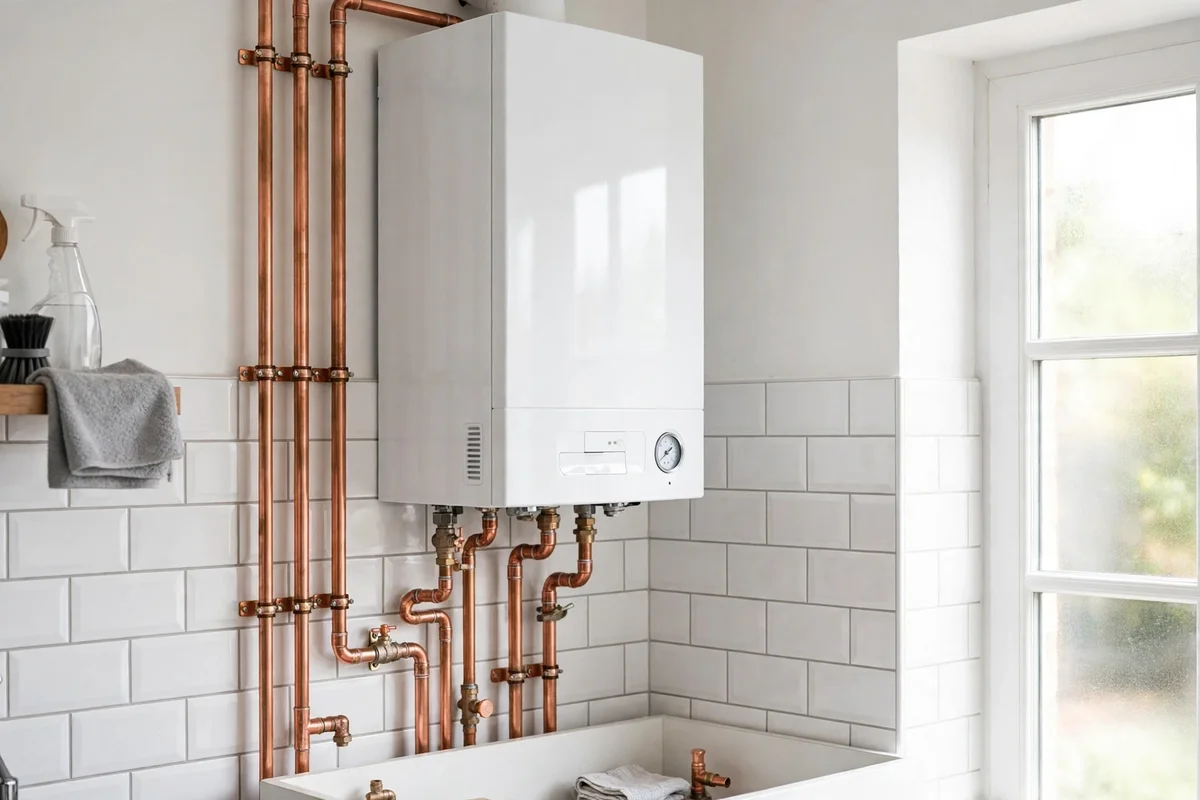
A combi boiler heats rooms and produces hot water from one wall unit, with no tank to house. That compact pairing suits smaller homes, and it needs careful sizing to work well.
A combi boiler combines two jobs in one unit: it heats water for radiators or baseboards, and it heats tap water on demand when a tap or shower opens. There is no stored hot water tank and no separate water heater to maintain.
When a tap opens, the combi diverts boiler heat to a plate heat exchanger that warms the incoming cold water instantly, and hot water flows within moments. When the tap closes, the boiler returns to room heating. That on-demand design saves space and avoids keeping a tank hot all day, which suits smaller homes, flats, and households with modest hot water use. It also means hot water performance depends on the incoming cold water flow and temperature: a combi can only heat the water flowing through it, so a home with weak mains flow or several taps running at once will feel the limit sooner than a home with a stored tank.
This page stays combi-specific on purpose. General boiler sizing, pipework, and venting still matter, and our boiler installation page covers those foundations, but the decisions here turn on combi flow rates, simultaneous tap use, and the absence of stored water. A combi that is chosen for a busy household with several bathrooms will disappoint, while the same unit in a smaller home with one bathroom and one shower will feel generous. Matching the unit to real tap habits is the whole job.
Combi sizing starts with hot water, not with room heat. Room heat demand for a smaller home is usually modest, while hot water demand sets the boiler output needed for a comfortable shower. Tell us about showers, baths, and taps that often run together.
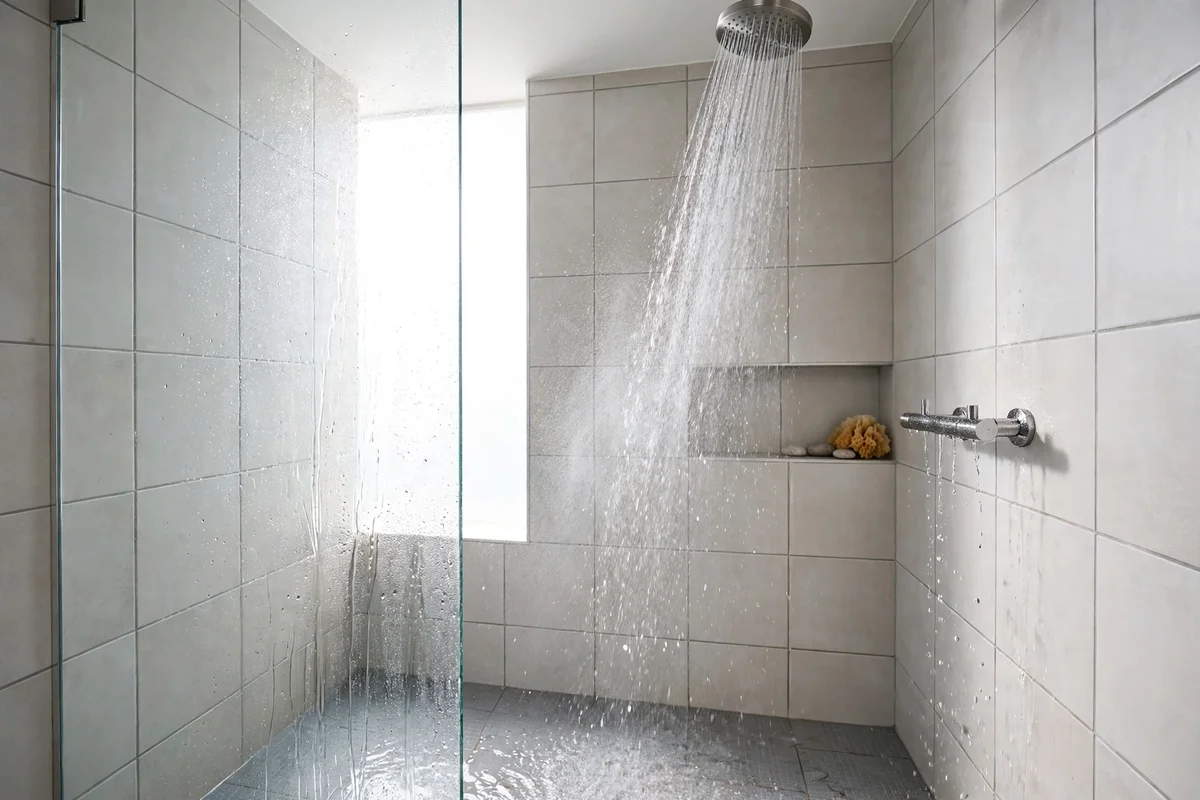
We ask about bathroom count, shower habits, and whether taps often run together, such as a shower running while a kitchen tap or washing machine draws water. A household that showers one person at a time with little overlap needs less hot water output than a household where two showers and a kitchen tap run together. Mains flow and pressure are checked as well, because a combi cannot deliver more hot water than the incoming supply allows, no matter how large the boiler. Where mains flow is weak, a combi may still work, but shower expectations need an honest conversation before install day.
Output ratings for combi boilers are quoted for a given temperature rise, and that detail matters. A unit that delivers a strong flow at a modest rise may deliver less at the rise needed on a cold winter day, when incoming water is colder. We explain that relationship in plain words and size the unit for winter conditions, not for a mild-day brochure figure. Radiator sizing is checked alongside, because a combi sized for hot water usually covers room heat for a smaller home with room to spare, but the radiators still need balancing so far rooms heat evenly.
Thinking about a combi boiler? Call (302) 555-0147 and discuss your home and hot water use.
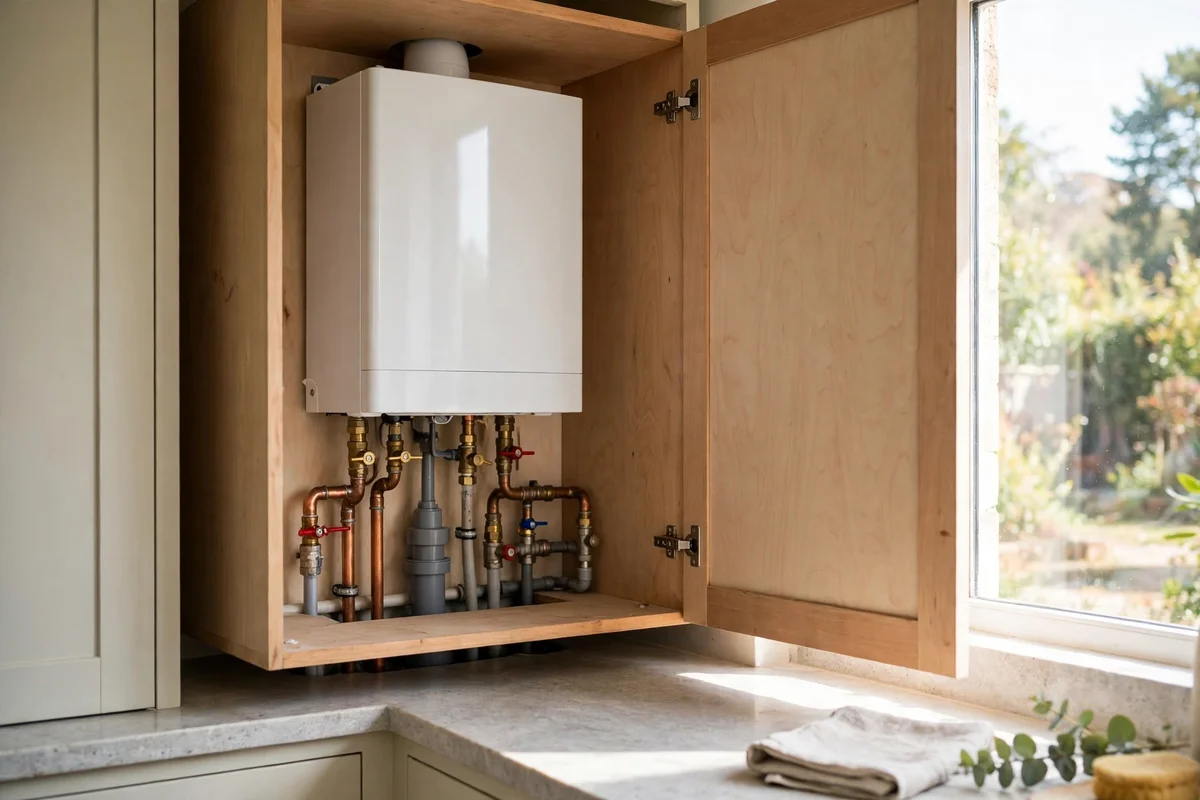
Call (302) 555-0147A combi install follows the same careful sequence as any boiler install, with extra attention to water supply, condensate, and flue route for a wall-hung unit. The compact size makes placement flexible, but placement still needs service access and safe venting.
We agree the position first, usually a utility room, kitchen cupboard area, or garage wall with clear service space and a safe flue route to the outside. Pipework is run for heating flow and return, cold water in, hot water out, gas supply, and condensate drain, with isolation valves so future service can shut the unit off cleanly. The flue is fitted to the maker instructions, and the condensate pipe is run with the fall and frost protection the instructions require, because a frozen condensate pipe is a common winter fault for condensing combi units. Existing radiators or baseboards are checked, valves are tested, and the system is filled slowly with air vented from each emitter.
Commissioning tests both jobs separately. We run room heating through its zones, checking radiator temperatures and balancing, then run hot water at taps and showers, checking flow, temperature stability, and any swing when a second tap opens. The thermostat and hot water temperature controls are demonstrated, and we explain how to read pressure, what a condensate blockage looks like, and when to call. A combi install is finished when both jobs feel right: rooms heat evenly, and a shower holds temperature when the house is in normal use.
Short on space for a tank? Call (302) 555-0147 and ask whether a combi unit fits.
Call (302) 555-0147Daily life with a combi boiler is simple: no tank to check, no stored water to keep hot, and hot water that arrives on demand. A few habits keep that simplicity working well. Note shower temperature swings and share that pattern with us.
Avoid running several large hot water draws at once where possible, because a combi heats one flow stream at a time and simultaneous draws split that stream. If shower temperature swings when another tap opens, tell us, because the cause may be mains flow, a scaled plate heat exchanger, or a control setting, and each needs a different fix. In cold snaps, check that the condensate pipe has not frozen if the boiler stops, and note any display fault before resetting, since repeated resets hide the underlying cause. Scale matters in hard water areas: a plate heat exchanger that scales up delivers less hot water and works harder, so a maintenance visit should include a hot water performance check.
Book a seasonal combi check covering burner, ignition, plate heat exchanger performance, condensate route, and controls, and ask about boiler maintenance and tune-up for that visit. We serve homes and businesses across Delaware, and our service areas page shows where we work. If household hot water demand grows beyond what a combi handles comfortably, ask us about indirect water heater services as the stored-water alternative.
Hard water affects combi boilers more than tank systems, because the plate heat exchanger that produces instant hot water has narrow passages where scale builds quickly. Scale narrows those passages, reduces hot water flow, and forces the boiler to work harder for the same shower.
In hard water areas, a combi hot water performance check belongs in every maintenance visit, covering flow rate, temperature stability, and any change from the previous season. A gradual fall in shower flow or a shower that swings temperature more than it used to can both point to scaling, and both are simpler to address early than after the exchanger blocks significantly. Treatment options depend on water hardness, household use, and pipework layout, and we discuss them during the maintenance visit rather than assuming one solution fits every home. Descaling or exchanger replacement, where needed, restores flow and temperature stability, and a record of flow readings season by season shows whether scaling is returning. Keep a note of shower flow and temperature behavior between visits, because that note turns a vague complaint into a measurable change a technician can act on.
Usually not. A combi produces hot water on demand for one flow stream, so a large home with several bathrooms and simultaneous showers will feel its limit. Larger homes usually suit a boiler with a stored or indirect tank, which can serve several taps at once.
No. A combi heats tap water instantly through a plate heat exchanger when a tap opens, so no tank is needed. That saves space, but it also means hot water flow depends on mains supply and boiler output together. Space, cupboard size, and flue route are worth noting during the survey.
A second tap splits the hot water flow, so each tap receives less heated water and temperatures can swing. Weak mains flow, a scaled heat exchanger, or a control fault can make the swing worse. Testing flow and heat exchanger performance identifies the cause.
Combi size follows hot water demand first, including bathroom count, shower habits, and whether taps run together. Room heat demand for a smaller home is usually covered once hot water output is set correctly. We size for winter incoming water temperatures, not mild-day figures.
A combi prioritizes hot water when a tap opens, then returns to room heating when the tap closes. Rooms may cool slightly during a long shower, but heating resumes promptly afterwards. That priority behavior is normal for combi operation. Mains flow and whether taps often run together are worth noting.
A combi fits a utility room, kitchen cupboard area, or garage wall, provided there is service access, a safe flue route to the outside, and a condensate drain point. We agree the position during the survey and check flue clearances before install day.
A combi needs adequate mains flow and pressure to deliver a comfortable shower. Weak mains supply limits hot water flow no matter how large the boiler is. We check mains flow during the survey and discuss expectations honestly before recommending a combi.
A seasonal check covering burner, ignition, plate heat exchanger performance, condensate route, and controls keeps a combi running well. Scale checks matter in hard water areas, because a scaled exchanger reduces hot water flow and forces the boiler to work harder.
Yes, but the change means adding a tank, reworking pipework, and revising controls, so it is a planned job rather than a simple swap. If household demand is growing, it is worth discussing the tank route before the combi reaches the end of its service life.
Tell us about your bathrooms, showers, and space, and we will explain whether a combi unit suits your home.
Stored hot water for busier households that outgrow on-demand flow.
Learn more →General install foundations: survey, pipework, venting, and testing.
Learn more →Thermostats and controls that manage room heat around hot water priority.
Learn more →Last updated: October 26, 2026.