Boiler Installation
A new boiler fitted to your home, sized from a proper room-by-room calculation.
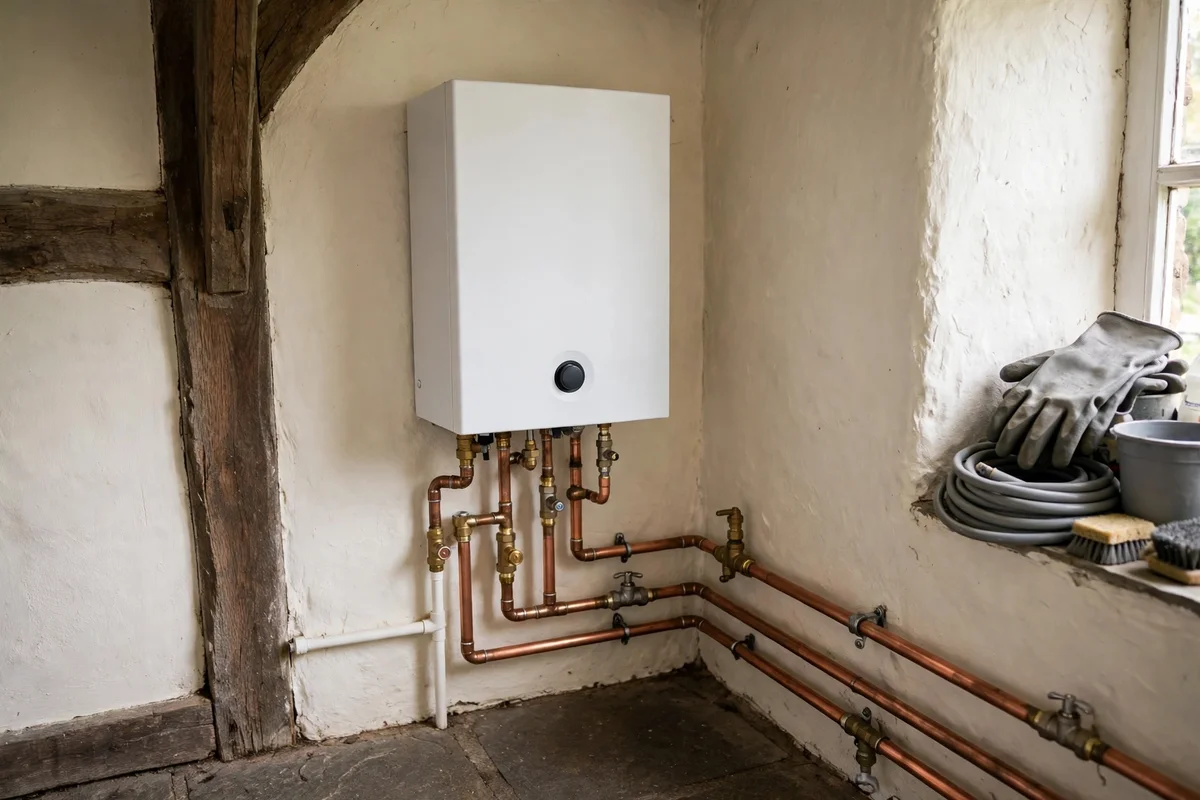
An oversized boiler wastes fuel and wears out faster, while an undersized one leaves rooms cold. Learn how proper sizing works.
By Boiler Guard Delaware
When a boiler is replaced, owners often assume a bigger unit means a warmer home. In practice, an oversized boiler cycles on and off too often, wastes fuel, and wears its parts faster, while an undersized boiler runs constantly and still leaves rooms cold. The right size matches the home's actual heat loss, room by room, and that match is what keeps rooms comfortable and bills sensible. This guide explains how sizing works and why a proper calculation beats a guess.
One more sizing trap deserves mention: extensions and conversions change heat loss, often more than owners expect. A converted garage, a finished basement, or a new sunroom adds rooms the original boiler never served, and it can also change how heat moves through the house. If your home has grown since the boiler was fitted, mention that growth when you ask for a survey, since the calculation must cover the home as it stands today, not the home as it was when the boiler went in.
A boiler sized to the home runs in long, steady burns, holding rooms at an even temperature. An oversized boiler fires in short bursts, overshoots the thermostat, then shuts down, and that stop-start pattern stresses ignition parts and controls. It also wastes fuel, since the boiler rarely runs at its best point.
An undersized boiler has the opposite problem. It runs flat out through cold weather and still cannot hold temperature, so rooms at the far end of the house stay cool. The boiler never rests, which wears the burner and pump, and the owner ends up turning the thermostat higher in a vain attempt to compensate, which only makes the boiler run harder.
Getting size right also protects comfort in mild weather. Delaware autumns and springs bring days that need only a little heat, and a well-sized boiler handles those days with gentle, steady output. An oversized unit on a mild day fires for minutes, overshoots, and shuts off, leaving rooms swinging between warm and cool.
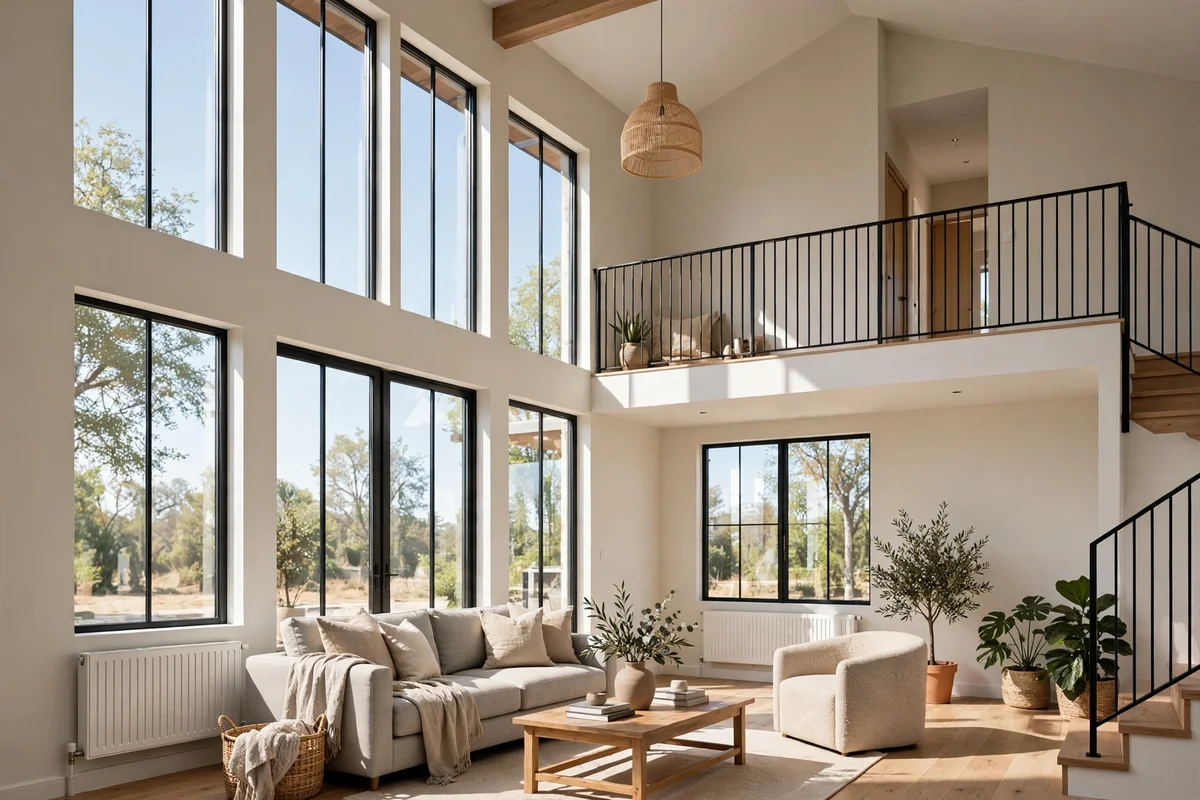
Heat loss sets the size, and heat loss depends on the home itself. Room sizes, ceiling heights, window area and quality, wall and loft insulation, and air leakage all let heat escape at different rates. A large, drafty older home can need far more heat than a smaller, well-sealed newer home, even when both have the same number of rooms.
Radiators matter too. A boiler can only deliver as much heat as the radiators can give to rooms, so a home with small or few radiators cannot use a huge boiler well. During a survey we look at radiator sizes alongside room sizes, since the two must match. Adding a bigger boiler to undersized radiators raises bills without raising comfort.
Hot water demand matters for combi boilers, which heat tap water on demand. A home with several bathrooms used at once needs a combi that can keep up with that flow, while a home with a stored hot water tank sizes the boiler mainly for heating. Tell us how your household uses hot water, since that detail changes the answer.
Not sure what your system needs?
Call (302) 555-0147The proper method is a room-by-room heat loss calculation. Each room is measured, its windows, walls, and insulation are noted, and the heat it loses on a cold design day is worked out. Those room figures add up to the home's total heat need, and the boiler is chosen to meet that total with a sensible margin, not double it.
That calculation replaces the old rules of thumb, such as sizing by house size alone or by copying the old boiler's size. Old boilers were often oversized when installed, and homes change, with new windows, insulation, or extensions altering heat loss. Copying the old size can repeat an old mistake, so a fresh calculation is worth the time.
A survey also looks at the pipework and radiators, since a boiler that matches heat loss still needs distribution that can carry it. If radiators are too small for a room, the answer may be a larger radiator rather than a larger boiler. That kind of judgment is what a survey is for, and it is why we visit rather than quote a size over the phone. Once the size is settled, the U.S. ENERGY STAR program's boiler listings can help you compare models.
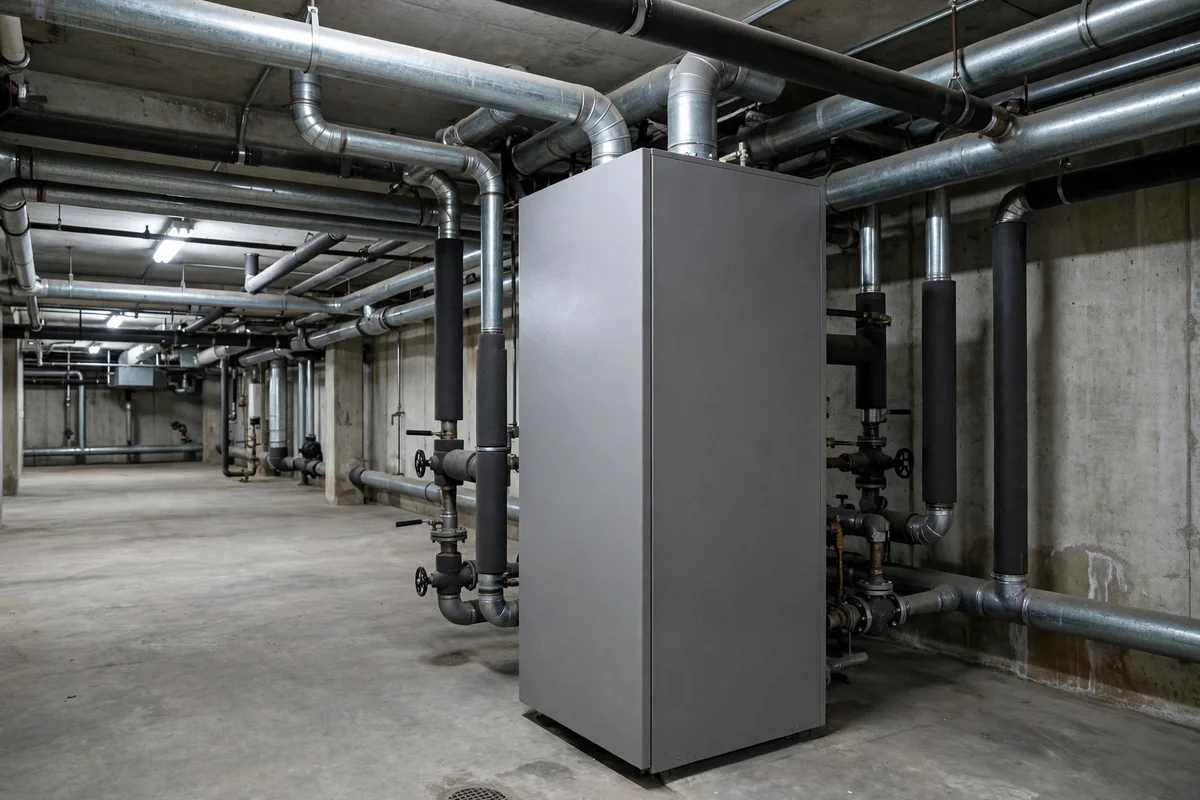
Delaware homes vary widely, from small Wilmington row houses to large Sussex county properties, and that range is exactly why rules of thumb fail. A row house shares walls with neighbors and loses less heat, while a detached home with tall windows loses more. A survey that measures your home, rather than assuming from its type, gives the right answer.
Older Delaware homes often have insulation added in stages, with some walls upgraded and others untouched, and that patchwork changes heat loss room by room. A room-by-room calculation catches those differences, while a whole-house guess misses them. The result is even heat, not one warm room and one cold room.
If you are planning a replacement, call us and ask for a sizing survey. Tell us the home's size, age, and any insulation or window work, and we will measure the rooms, check the radiators, and recommend a boiler that fits the home rather than the largest one that fits the budget. The right size is the one that heats the house steadily, quietly, and without waste. See also our Boiler Installation page for details on what that involves.
No, a bigger boiler is not better. An oversized boiler cycles on and off in short bursts, wastes fuel, and wears ignition parts and controls faster. The right boiler matches the home's heat loss, runs in steady burns, and holds rooms at an even temperature.
Not always. Old boilers were often oversized, and homes change with new windows, insulation, or extensions. A fresh room-by-room calculation gives the right size for the home as it is now, rather than repeating a size chosen decades ago for a different house.
Yes, since a boiler can only deliver as much heat as radiators can give to rooms. A home with small or few radiators cannot use a huge boiler well, and the answer may be a larger radiator rather than a larger boiler. A survey checks both together.
The reliable way is a room-by-room heat loss calculation, which measures each room, its windows, walls, and insulation, and works out the heat it loses on a cold day. Those figures add up to the home's total need, and the boiler is chosen to meet it with a sensible margin.
An oversized boiler fires in short bursts, overshoots the thermostat, and shuts down, stressing ignition parts and controls. It wastes fuel, since it rarely runs at its most efficient point, and rooms can swing between warm and cool, especially on mild days.
An undersized boiler runs constantly in cold weather and still leaves rooms cold, especially far from the boiler. It never rests, which wears the burner and pump, and turning the thermostat higher only makes it run harder without solving the shortfall.
For a combi boiler, yes, hot water demand matters, since it heats tap water on demand and must keep up when several taps run at once. For a home with a stored hot water tank, heating need sets the size mainly, and the tank handles peak hot water demand.
Yes, better insulation lowers heat loss, so a well-sealed home needs a smaller boiler than a drafty home of the same size. That is why a fresh calculation matters after window or insulation work, since the old boiler may now be larger than the home needs.
Yes, often. A survey can show that the old boiler was oversized, that radiators are too small for a room, or that one room loses far more heat than the rest. Those findings change the recommendation, and they lead to steadier heat and lower waste.
Tell us about your home, and we will survey the rooms and radiators and recommend a boiler that fits.
A new boiler fitted to your home, sized from a proper room-by-room calculation.
When the old unit is past its best, a replacement sized to the home as it is now.
When radiators are too small for a room, the fix may be a radiator, not a bigger boiler.
Last updated: October 26, 2026.