Boiler Maintenance and Tune-Up
A seasonal check that catches stuck pumps and tired vents before Claymont winter arrives.
Learn more →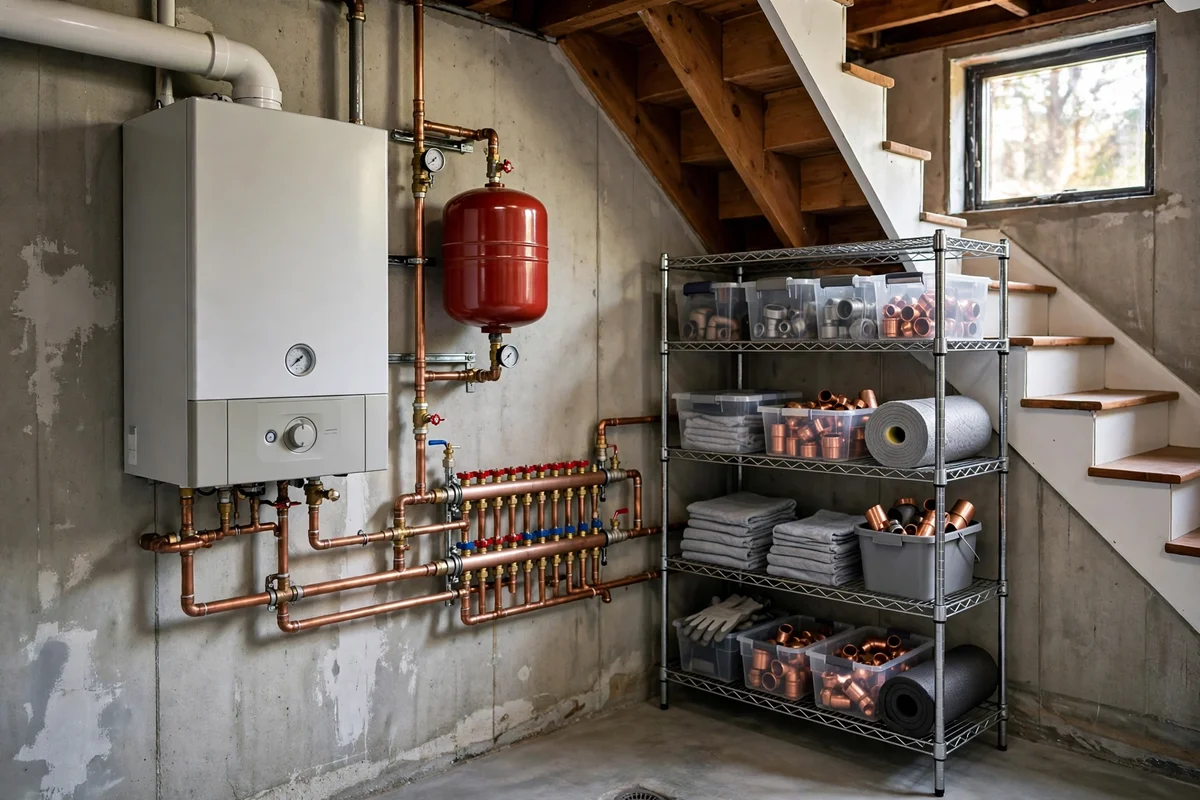
Claymont sits at the northern edge of Delaware, where Philadelphia Pike meets the Delaware River and the first suburbs north of Wilmington grew. We repair and replace boilers across Claymont, from the Ardens to the riverfront neighborhoods and the postwar streets in between.
Claymont winters bring damp cold off the Delaware River, with freeze-thaw cycles that move water, air, and metal through a heating system. Riverfront neighborhoods feel it first, since damp air off the water keeps basements humid and wind off the river cuts through older homes.
The symptoms follow the weather. Radiators gurgle after a cold snap as air collects at high points in the loop, and riverfront houses feel it fast, since damp air rusts vent threads and valve stems. Pipes in unheated corners, especially in postwar homes where a lower level sits partly below grade, lose heat fast and can freeze, which shows up as a loop that will not circulate or a joint that bursts when it thaws. Humid summers matter too, because a boiler left idle for months can seize: a circulator pump that sat all summer may hum without turning when October calls it back. The Delaware state government site, delaware.gov, carries links to state agencies and programs, and it is a useful starting point for anyone researching heating and energy programs in the state.
We schedule around that cycle. A tune-up in late summer picks up stuck pumps, tired vents, and weak ignition before the heating season, and a midwinter check searches for strain that shows only after long cold spells. Everyday habits help: radiators kept clear of furniture, a boiler area kept clear of stored boxes, and a call when a radiator stays cold past a day, rather than waiting for the whole house to lose heat.
Claymont housing runs from the Ardens, the historic arts-and-crafts communities south of town, to postwar subdivisions and riverfront neighborhoods, and the heating follows the same spread. Older homes carry radiators and iron pipe, postwar homes carry baseboards, and renovated homes mix both.
The Ardens bring the oldest systems, with houses built as an arts community where each home differs from the next, and a boiler added decades ago now feeds a mix of radiators, baseboards, and additions. Postwar streets like Shipley Heights and Weldin Woods hold ranches and split-levels where a single boiler once served the whole house and now struggles with finished basements. Riverfront neighborhoods near Fox Point State Park face the dampest basements in town, and their boilers show rust first. Renovated homes across Claymont add another layer, since a new kitchen or bathroom often adds a zone that the original loop never planned for.
Materials follow the same pattern. Cast iron radiators hold heat long after the boiler stops, which suits a house that empties during the day. Copper baseboards respond fast but show every air bubble as a gurgle. Older iron pipe sheds scale into the boiler, so flushing matters more in the oldest houses than in a new system. Knowing the house type tells us where to look first, and we still verify on site before we touch anything.
Boiler losing heat in Claymont? Call us and tell us the symptom and your street.
The Ardens Historic District, covering Arden, Ardentown, and Ardencroft just south of Claymont, holds some of the most distinctive houses in Delaware, with arts-and-crafts homes on wooded lots where each heating system differs from the next. Woods at Naamans and Mayfield, toward the north of Claymont, hold postwar subdivisions with ranches and split-levels, where baseboards and panel radiators dominate.
Shipley Heights and Weldin Woods, on the residential side of town, hold family homes on quiet streets with basements that are easier to move around in. North Claymont, toward the Pennsylvania line, holds smaller lots and older homes with tighter basements. The riverfront side, near Fox Point State Park and Bellevue State Park, holds neighborhoods where the Delaware River shapes daily life and basement dampness shapes heating. Gwinhurst, Holly Oak, Silverside Heights, and Hillendale, the communities that ring Claymont to the south, mix small postwar homes with newer builds. Claymont carries ZIP code 19703, which covers the town and the surrounding area, so a Claymont address tells us the town but not the house, and we always check on site.
We ask for your neighborhood and street on every call because Claymont neighborhoods differ sharply from one to the next. An Arden arts-and-crafts house, a Shipley Heights ranch, and a riverfront home near Fox Point each need a different first check, and knowing which one waits for us shapes the visit.
Claymont boiler work covers repairs, replacements when repair stops making sense, and servicing for radiators, baseboards, vents, and controls across town. Hot water systems dominate here, along with steam in the oldest houses and combi units in smaller homes. Arden houses and postwar ranches each get checked on their own terms.
A repair call in Claymont often starts with a house type, not just a symptom. An Arden house with a mixed system, a split-level with a finished basement, and a riverfront home with a damp basement each need a different approach, and we check the whole loop before deciding. A boiler that locks out, a radiator that stays cold, a pressure gauge that climbs, or a house where one floor heats and the other does not each point to a different part of the system, and we test before replacing parts. When replacement is right, we size the new unit to the house as it stands, with its additions and insulation, rather than copying the old unit. Our services page lists the full range, from emergency repair and installation to maintenance, radiator work, and boiler controls.
Small commercial buildings along Philadelphia Pike get the same treatment. A shop with a failing boiler loses a day of trade with every cold morning, so we check every zone and explain the options plainly, without jargon.
Claymont landmarks make describing your home easy. Philadelphia Pike, the town's main road, runs through Claymont toward Wilmington and the Pennsylvania line. Bellevue State Park and Fox Point State Park sit along the river to the east, and the Claymont Stone School marks the older side of town. Archmere Academy sits just south of Claymont toward the Ardens.
Those landmarks help us plan the day. A call from the Ardens and a call from North Claymont are different routes, and the Philadelphia Pike corridor needs a different approach than the riverfront streets. The parks along the river mark the eastern edge of town, while Interstate 95 and Interstate 495 mark the western and southern edges, and the Pennsylvania line sits just north. For travel, Philadelphia International Airport is the nearest large airport, a short drive north, and Wilmington Airport sits to the south. ChristianaCare Wilmington Hospital is the closest large hospital, a short drive south into Wilmington.
When you call, a neighborhood and a cross street save time for everyone. Tell us the symptom, the kind of heat emitters you have, and whether your house is an older home, a postwar ranch, or a renovated home, and we will talk through what to check while we arrange the visit. Charlie's Pizza on Philadelphia Pike is a Claymont favorite, and it makes a handy landmark when you point us toward your street.
Claymont boilers run from November to March, rest through river-humid summers, and expose faults when autumn and spring arrive. A seasonal rhythm catches those faults while they are still small, and the autumn check is the one that matters most.
We treat spring as cleanup time: flushing sediment, replacing vents that hissed all winter, and checking fittings that spent months in damp basement air. Summer suits larger jobs, since a replacement or a new zone goes in with little disruption while the house is warm and the boiler is idle. Autumn is when the main check happens: we fire the system from cold, bleed every radiator, test the controls, and watch a full heat cycle from startup to shutdown, so the first cold night does not bring a surprise. In winter we watch for a drifting pressure gauge, a new pump noise, or a room that cools first, and each deserves a call while the fault is still small.
Riverfront homes deserve one extra habit: checking basement dampness through the humid months, since damp air rusts fittings while a boiler sits idle. A dehumidifier in the boiler room and a late-summer service visit together keep an idle boiler ready for October, and that habit is what keeps Claymont systems heating through the coldest weeks.
Basements near the Delaware River run damper than most, and damp air rusts valve stems, vent threads, and control parts over time. Rust seizes valves and causes intermittent control faults that are hard to trace. Ventilation, clear space around the boiler, and a dehumidifier through humid months all slow the damage, and we check for rust at every maintenance visit.
Yes, mixed systems are a normal part of our Claymont work, especially in the Ardens where each house differs from the next. A house that mixes radiators, baseboards, and additions needs the loop checked as a whole, since a fault in one part affects the rest. We test each emitter type and each zone before deciding, and we choose parts that match the system they serve.
A finished basement adds a zone that the original boiler never planned for, and that zone sits at the lowest point of the loop, where sediment settles and circulation is weakest. Air also collects at the highest radiators, leaving the basement loop starved. Balancing the loop, bleeding the basement emitters, and checking circulation for that zone usually restores even heat.
The answer turns on frequency and severity. A boiler that has served well and now needs one repair is normally worth keeping. When breakdowns stack up, water appears where it should not, or pressure fades during a cold snap, replacement deserves a serious look. We examine the boiler, the radiators, and any changes to the house, and we talk through both paths before you decide.
Yes, we cover Claymont and the Ardens Historic District, including Arden, Ardentown, and Ardencroft, as well as Woods at Naamans, Mayfield, Shipley Heights, Weldin Woods, and North Claymont. The ZIP code 19703 covers the area, and the system in each neighborhood gets treated on its own terms, whether that is a mixed system in an Arden house or baseboards in a postwar ranch.
A lockout means the boiler tried to fire and stopped for safety, and cold snaps expose the weakest part first. Check that the thermostat is calling for heat, that the boiler has power, and that the pressure gauge sits in its normal range. If the unit locks out again after one reset, leave it off and call us, since repeated resets can mask the real fault.
Tell us your neighborhood, the house type, and what the system is doing differently. We will talk through the next step and arrange a visit.
A seasonal check that catches stuck pumps and tired vents before Claymont winter arrives.
Learn more →Cold, noisy, or leaking radiators, from Arden originals to new panel radiators.
Learn more →Scale and sediment removal for old iron pipe and radiators in Claymont houses.
Learn more →Last updated: October 26, 2026.